Rutha Bishop Rogers
March 6, 1885 – December 12, 1918
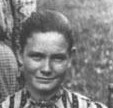
Rutha Bishop Rogers — remembered by Great Aunt Mary as “the most beautifullest woman I ever saw.”
Remembered for Her Beauty
Records can tell us when Rutha was born, whom she married, the names of her children, and when she died. Family memory gives us something different.
Great Aunt Mary remembered Rutha not as a line on a census page, but as a woman she had actually seen — dressed nicely, her hair fixed, riding side-saddle beside her family.
“The most beautifullest woman I ever saw.”
It is only a handful of words, but it is perhaps the most personal description of Rutha that survives.
A Bishop Daughter
Rutha was born in Kentucky on March 6, 1885, a daughter of Elias Bishop and Delilah "Lila" Babb Bishop.
She grew up among the Bishop families of the Estill and Powell County area, in the same creek-and-hill country where she would later raise her own children.
Hezekiah & Rutha
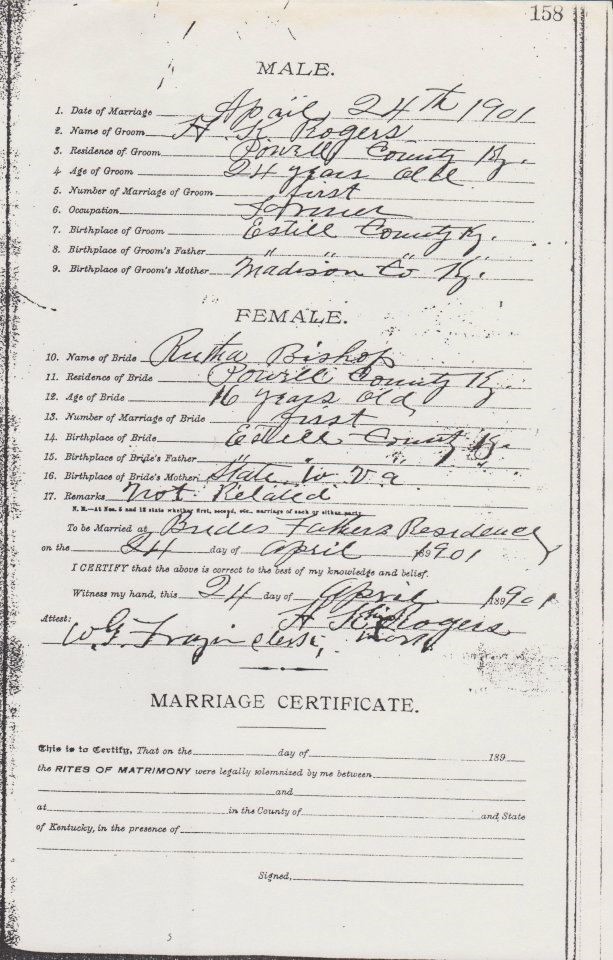
On April 24, 1901, Rutha Bishop married Hezekiah Rogers, the man remembered in the family as “Izzie Carl.”
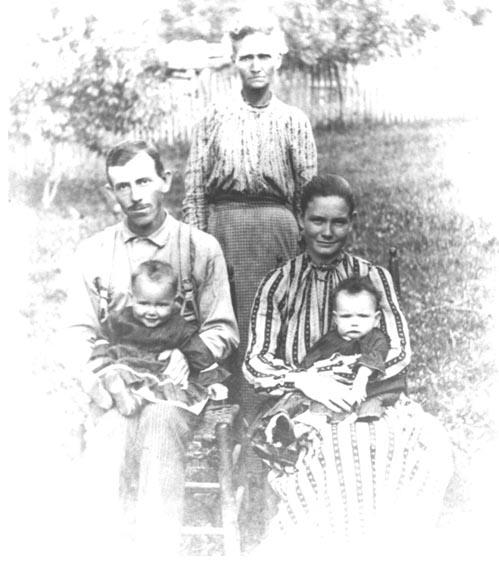
Much of Rutha’s paper trail is shared with Hezekiah because theirs was a household story: marriage, farming, children, and life in the Kentucky hills.
A Mother’s Story
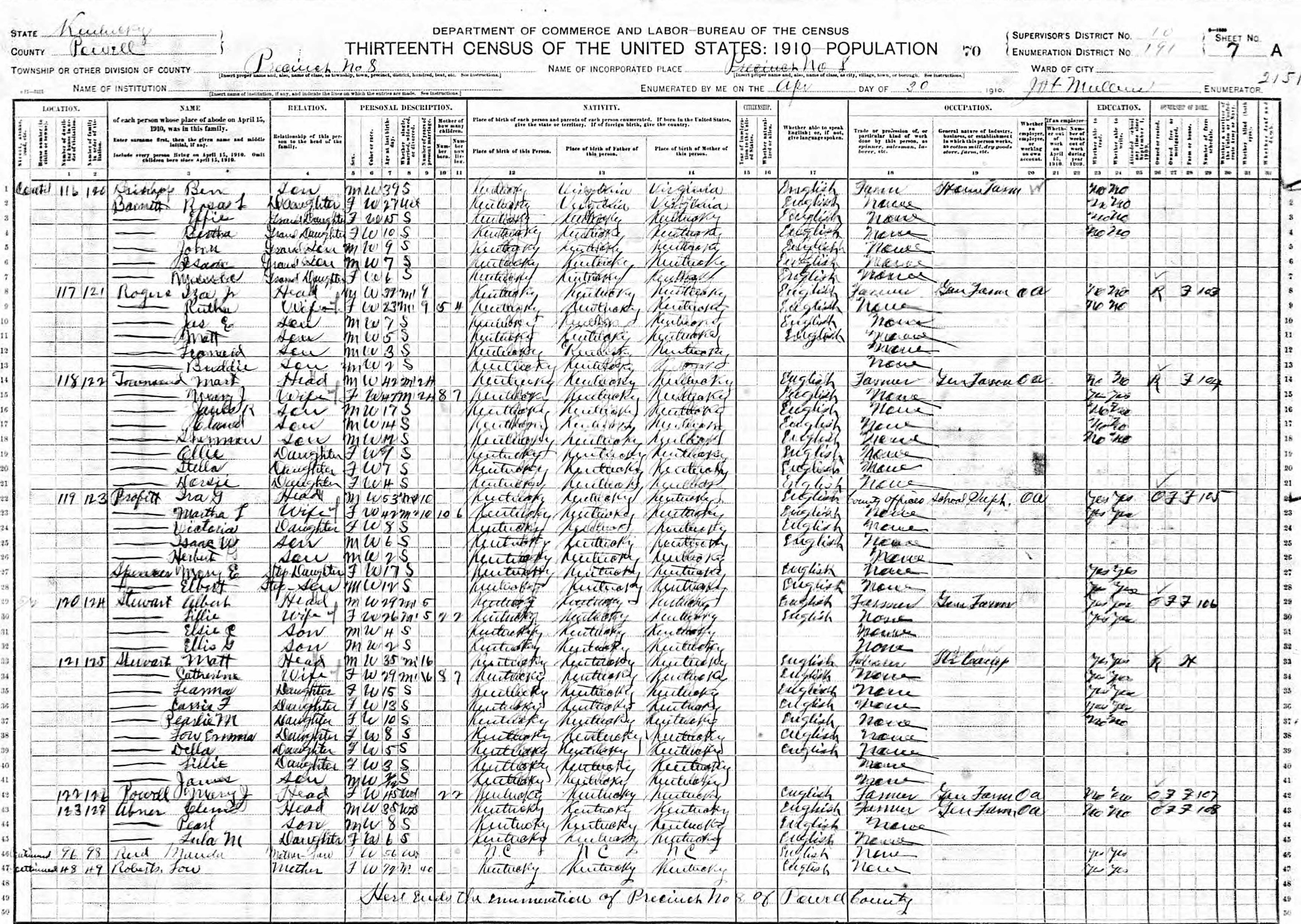
The 1910 census leaves one of the most important clues to Rutha’s life as a mother. She reported that she had given birth to five children, with four still living.
The identity of the child who had died has never been established. Grandpa Rogers later remembered that a baby in the family had died, although by the time he told the story he could no longer remember the baby’s name or whether the child had been a boy or a girl. The two memories may belong together, but there is not enough evidence yet to say so for certain.
The family continued to grow. A newspaper notice records the birth of a baby girl to Mr. H. K. Rogers and Ruth Rogers on October 24, 1914.
A Day Aunt Mary Remembered
In 1918, Great Aunt Mary remembered seeing Rutha riding side-saddle, dressed nicely with her hair fixed, when Hezekiah went to register for the draft.
Little Matt was there too, wearing his brown cap and jacket and carrying a poke of candy.
It was a simple family scene, remembered because someone who saw it carried it forward. Knowing what was soon to happen makes that ordinary day all the more precious.
The Autumn and Winter of 1918
The influenza epidemic of 1918 brought terrible loss to the Rogers family.
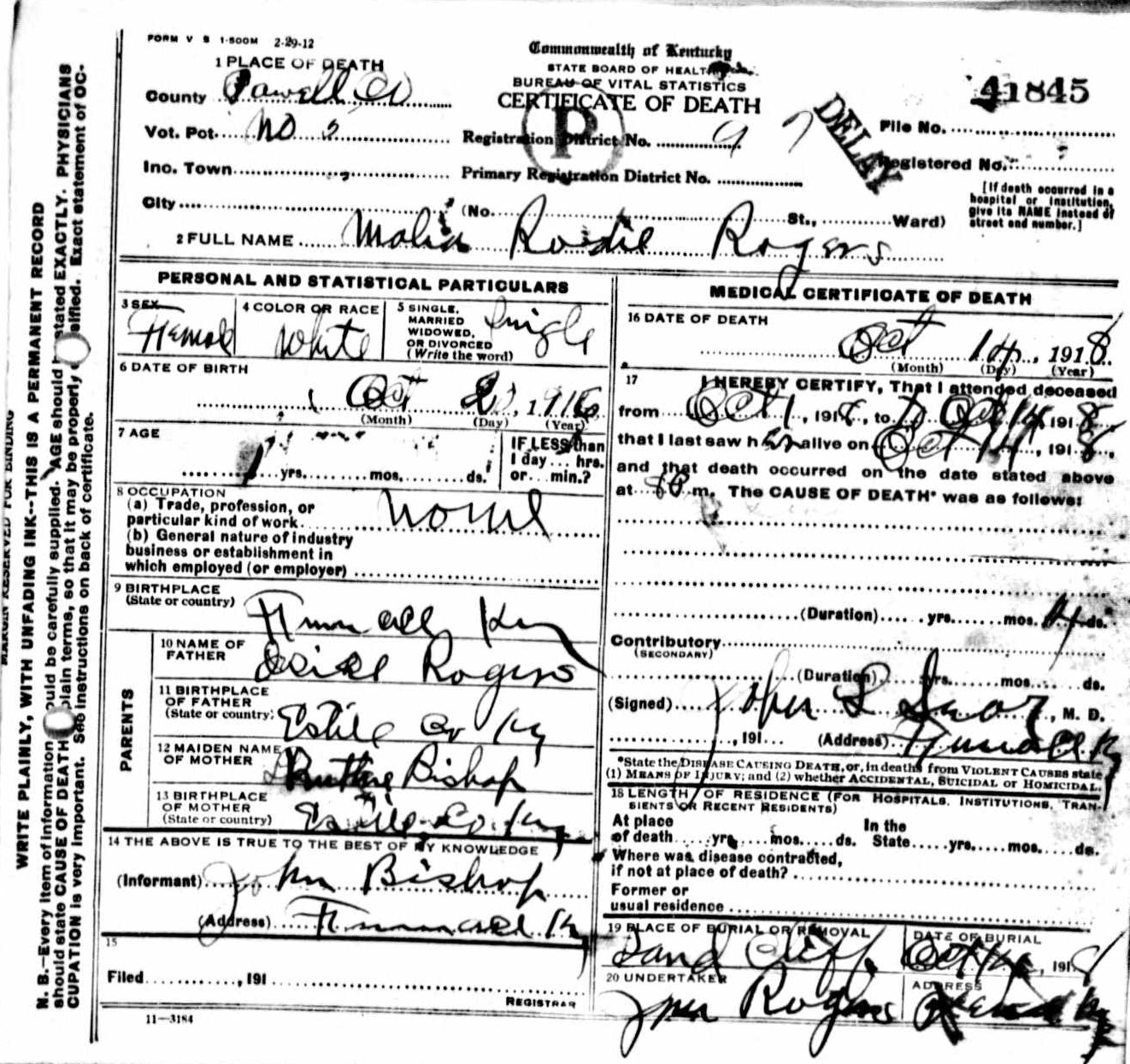
Their daughter Malia Rodie Rogers died in 1918, and Rutha herself died later that year.
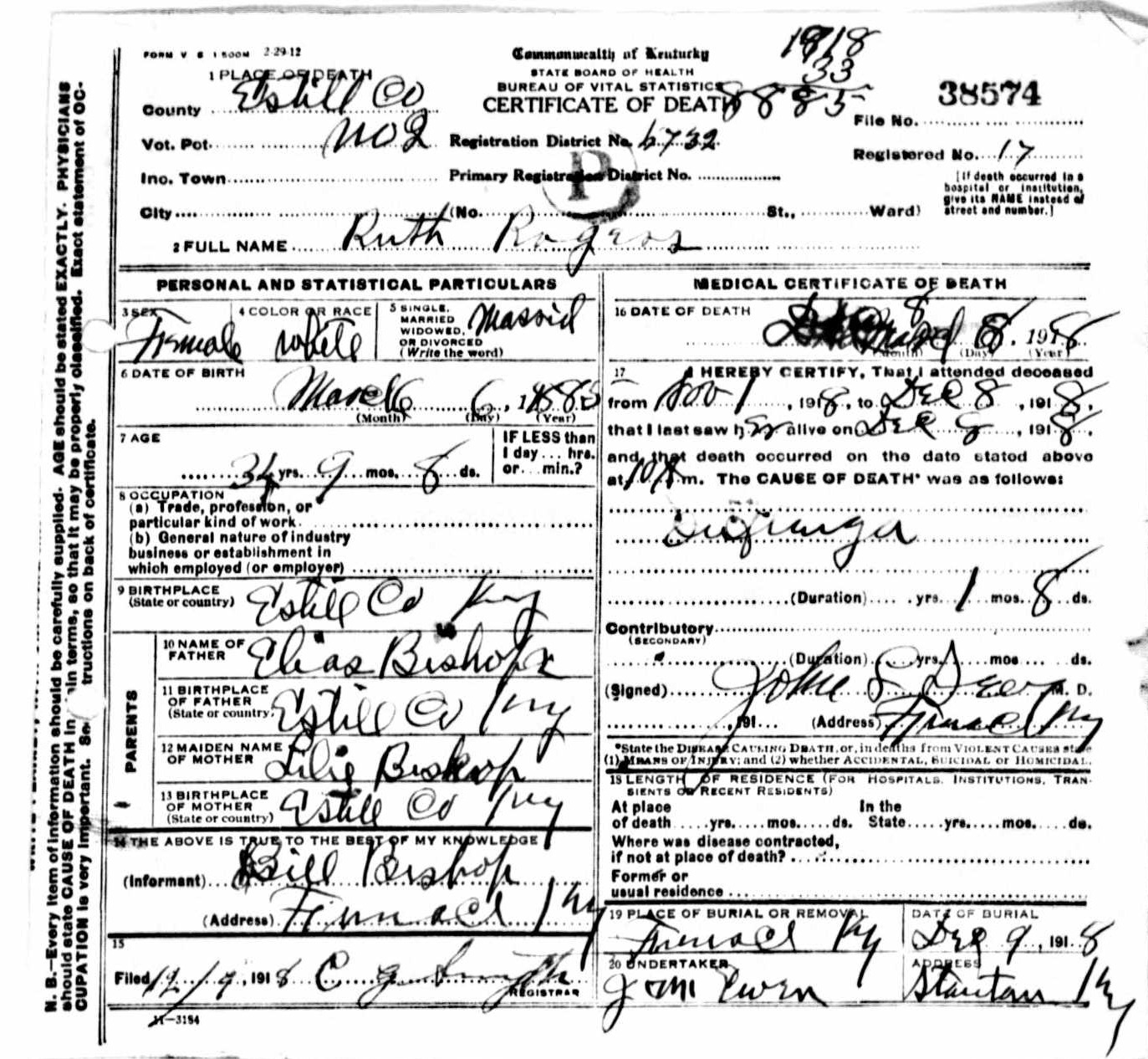
Rutha’s death left behind an unusual paper trail. Two death certificates were filed for her, one in Powell County and another in Estill County, reflecting the family’s home along the Powell–Estill County line. One certificate was supplied by her brother, while the other was completed from the attending physician’s information.
The physician’s certificate records influenza and also refers to premature childbirth, showing that Rutha was pregnant when she died and that her baby was lost as well. In a year already marked by illness and grief, her death brought yet another loss to the Rogers family.
Hezekiah is remembered as having died only a short time after Rutha, leaving their children without either parent.
Mother, Daughter, and Father
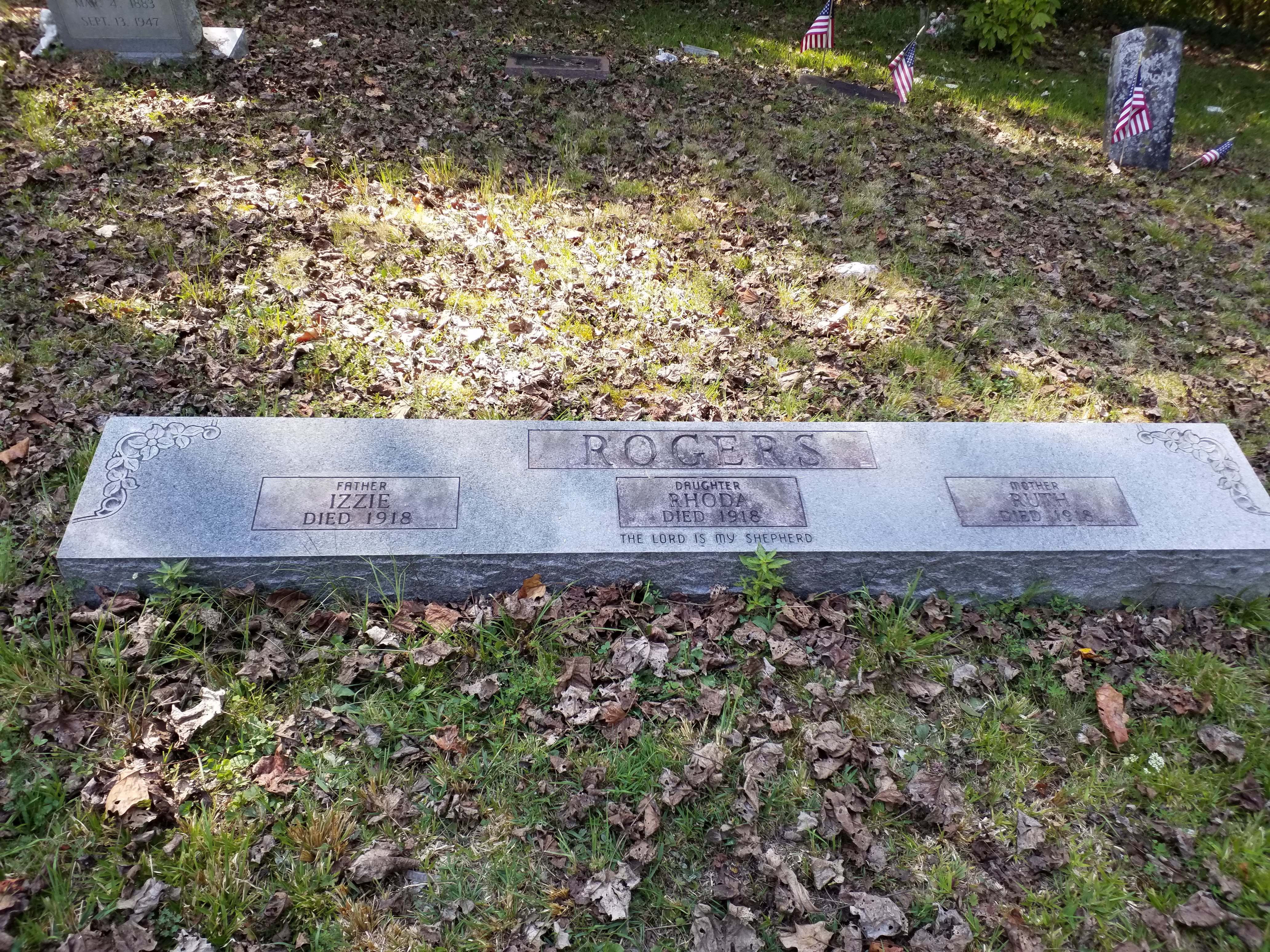
At Wireman Cemetery, one family stone remembers the losses of 1918 in the simplest possible way: Father Izzie, Daughter Rhoda, and Mother Ruth.
The stone does not tell the whole story. It does not show the household before influenza, the children left behind, or the memories still carried by later generations. But it keeps their names together.
The Children She Left Behind
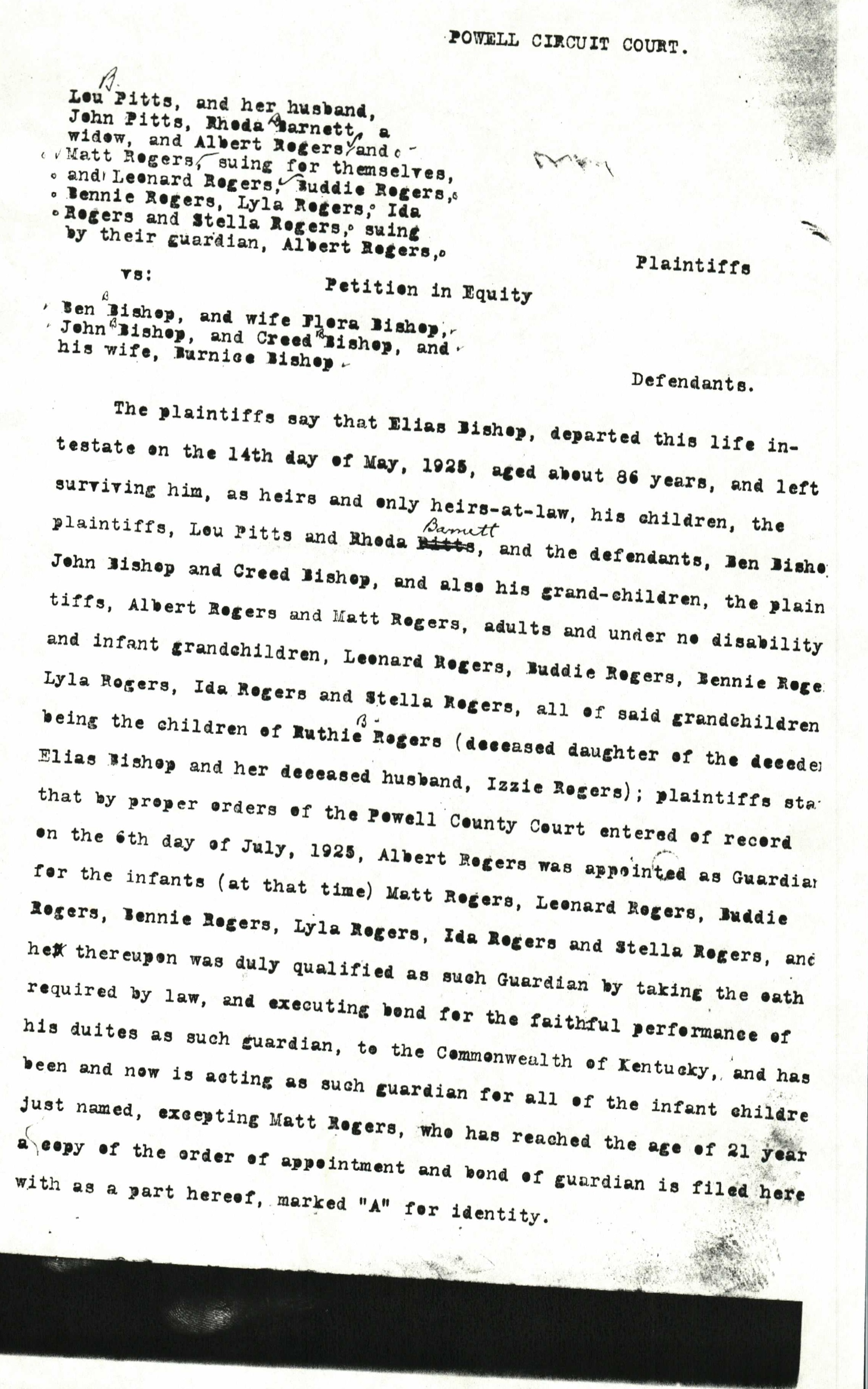
Years later, court records documented Albert Rogers — Uncle Albert — as legal guardian of the younger Rogers children.
Family memory tells that the children were then divided among relatives. Several went to Ben Bishop, Lila went to Creed Bishop, and Benny is believed to have lived with Hezekiah’s brother Marcus D. Rogers.
Their mother’s death was not only the end of Rutha’s own life. It changed the shape of the entire family.
Pieces of Rutha
What survives of Rutha is scattered across records and memory: a marriage record, a census entry counting children born and lost, a newspaper notice for a baby girl, an old family photograph, a remembered side-saddle ride, a death certificate, a shared family stone, and the words of an aunt who never forgot how beautiful she was.
Together, those pieces give Rutha something more than dates. They give her a presence.
Records & Keepsakes

Quilt Note
Remembered for her beauty and held close through family memory, Rutha’s story lives on in the children, photographs, and quiet pieces of history she left behind.