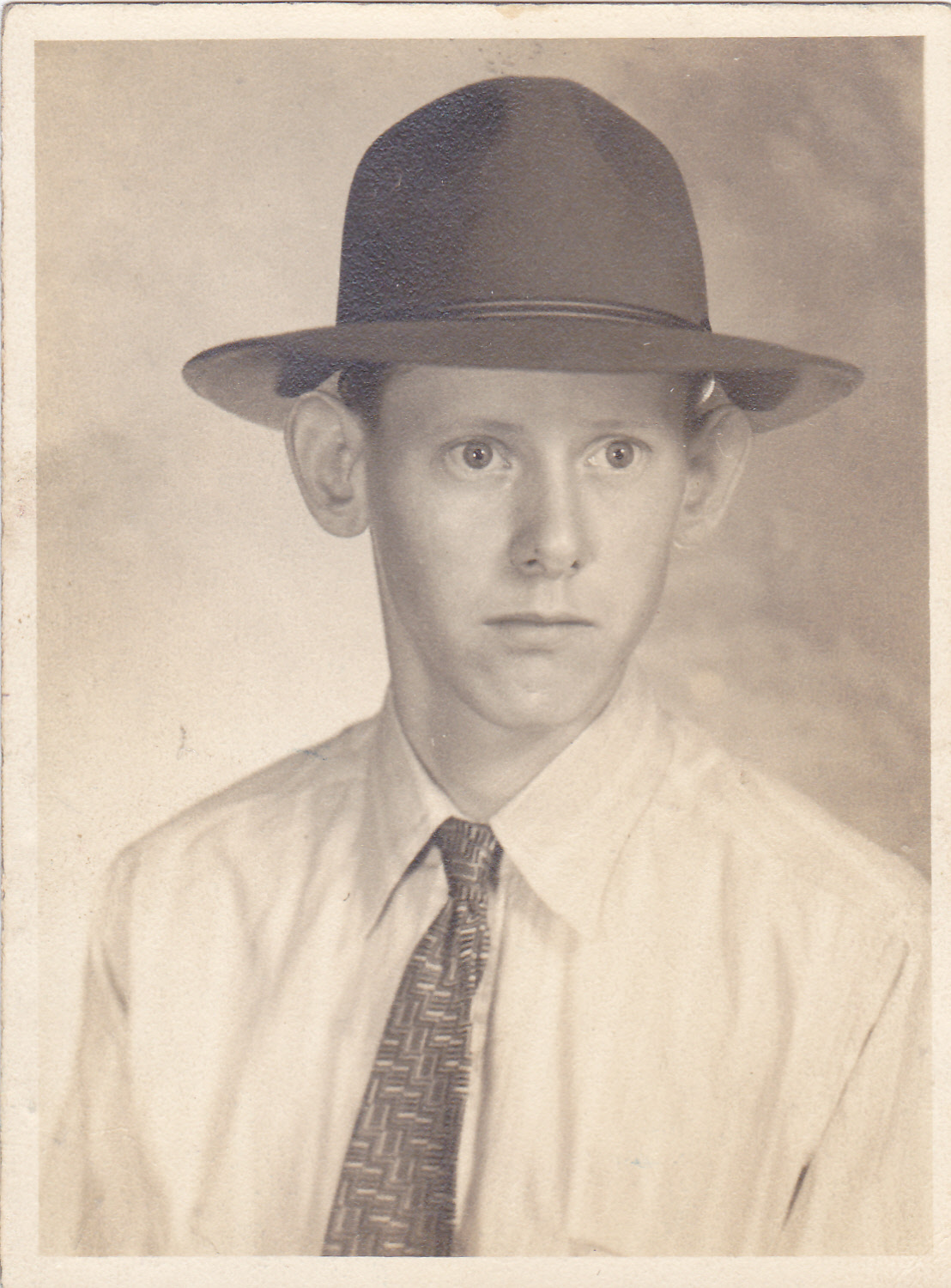
Growing Up in Kentucky
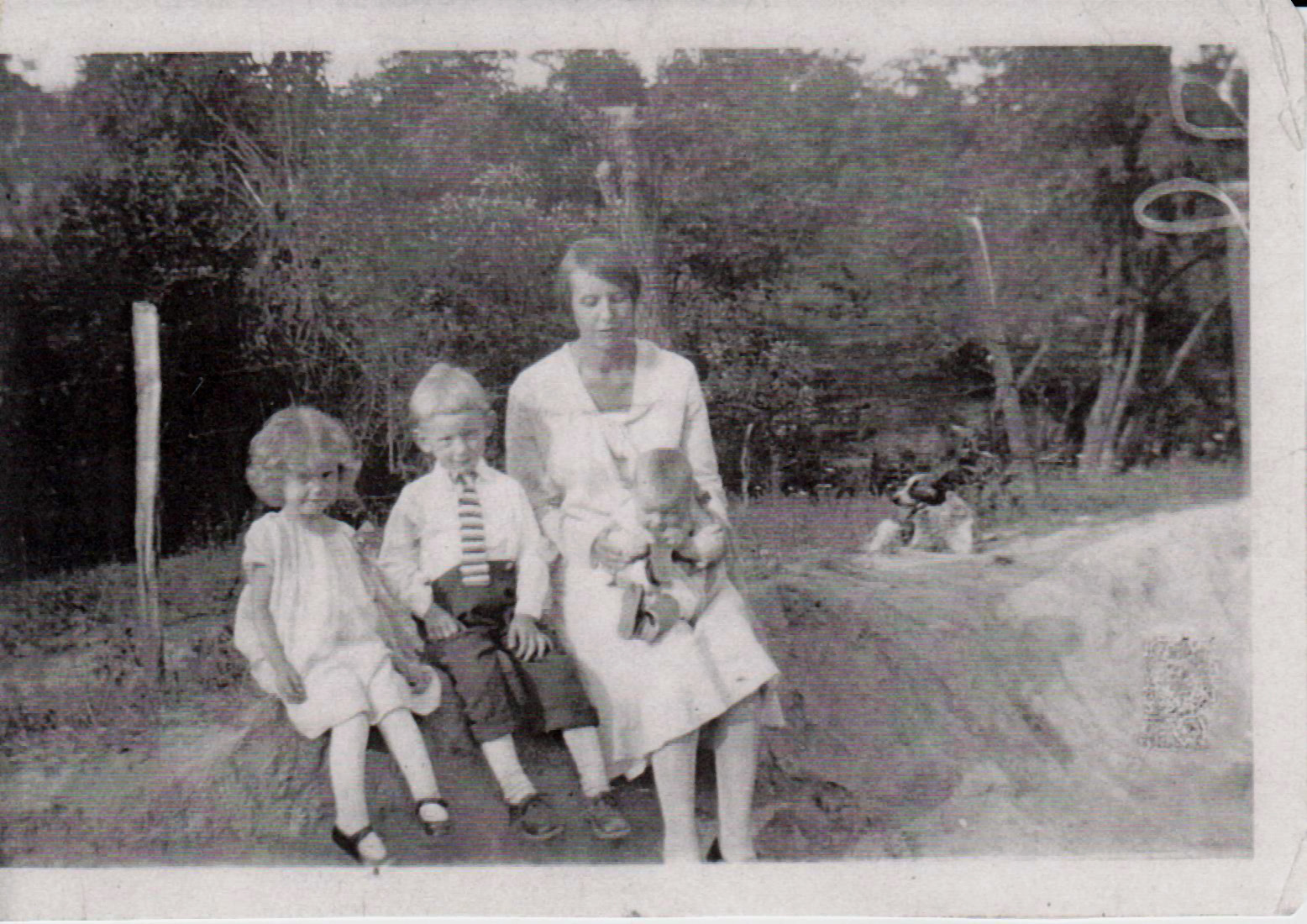
Hezekiah Rogers — Hez to the family — was born November 27, 1925, in Menifee County, Kentucky, the son of Matt Rogers and Hazel Robbins Rogers. He grew up among a houseful of brothers and sisters, one more child in a family whose days were shaped by work, kinfolk, and the hills of eastern Kentucky.
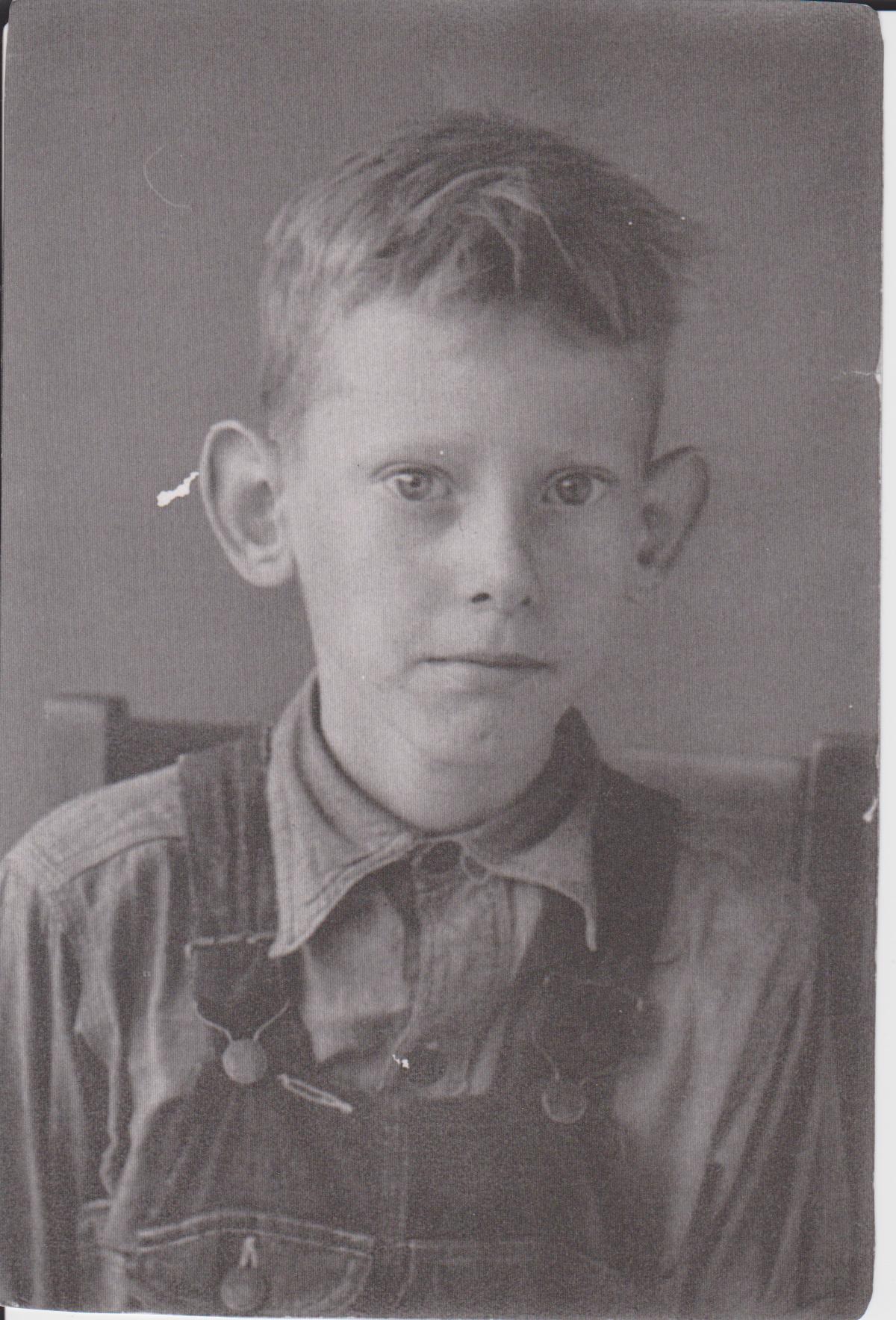
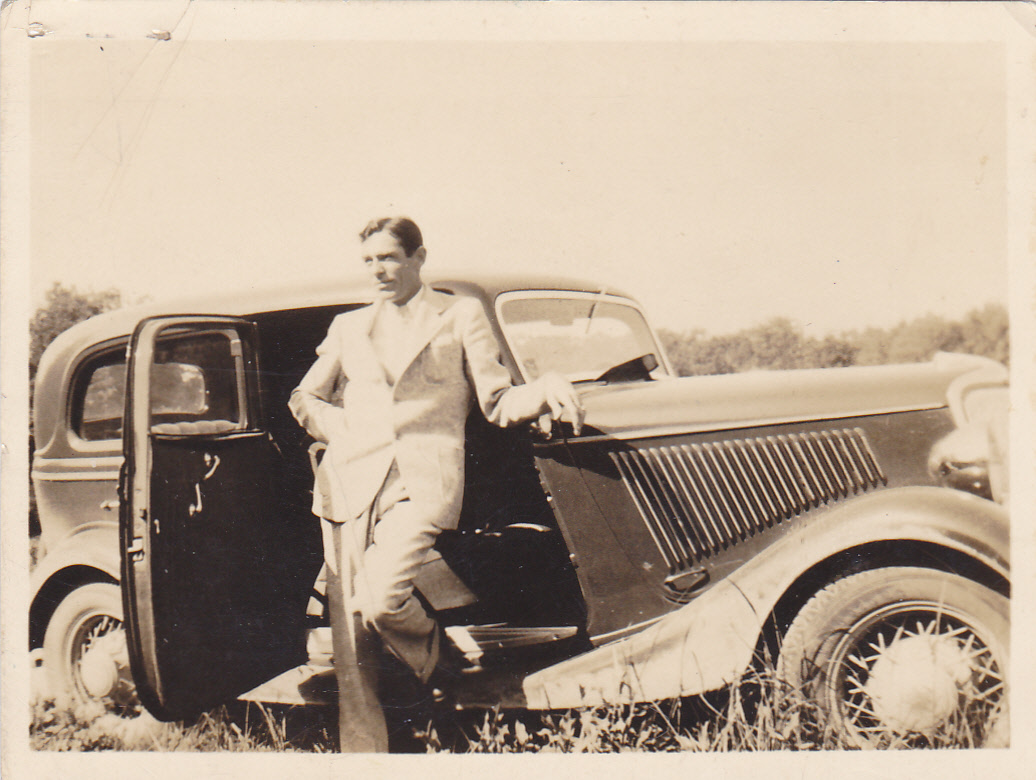
The 1930 and 1940 censuses place him there with the family, but those old census lines can only tell so much. The photographs tell a little more: a solemn little boy, then an older child, and finally the young man Hez was becoming before he left Kentucky to make a life of his own.
“The Brother Who Stood Between”
Of all the things my Dad remembered about Hez, one of the strongest was that his older brother looked out for him. Home life was not always easy, and Daddy told me that when things became difficult between him and their father, Hez would step in. To a younger brother, that kind of protection is not easily forgotten.
After Hez left home, life changed again. In time, Daddy left Kentucky and came to Indiana to stay with their sister Ruth. Years later, when he spoke of Hez, the memory that remained was of the brother who had tried to shield him when he needed it most.
This is a family memory shared with me by my father and preserved here as he remembered it.
Coming of Age
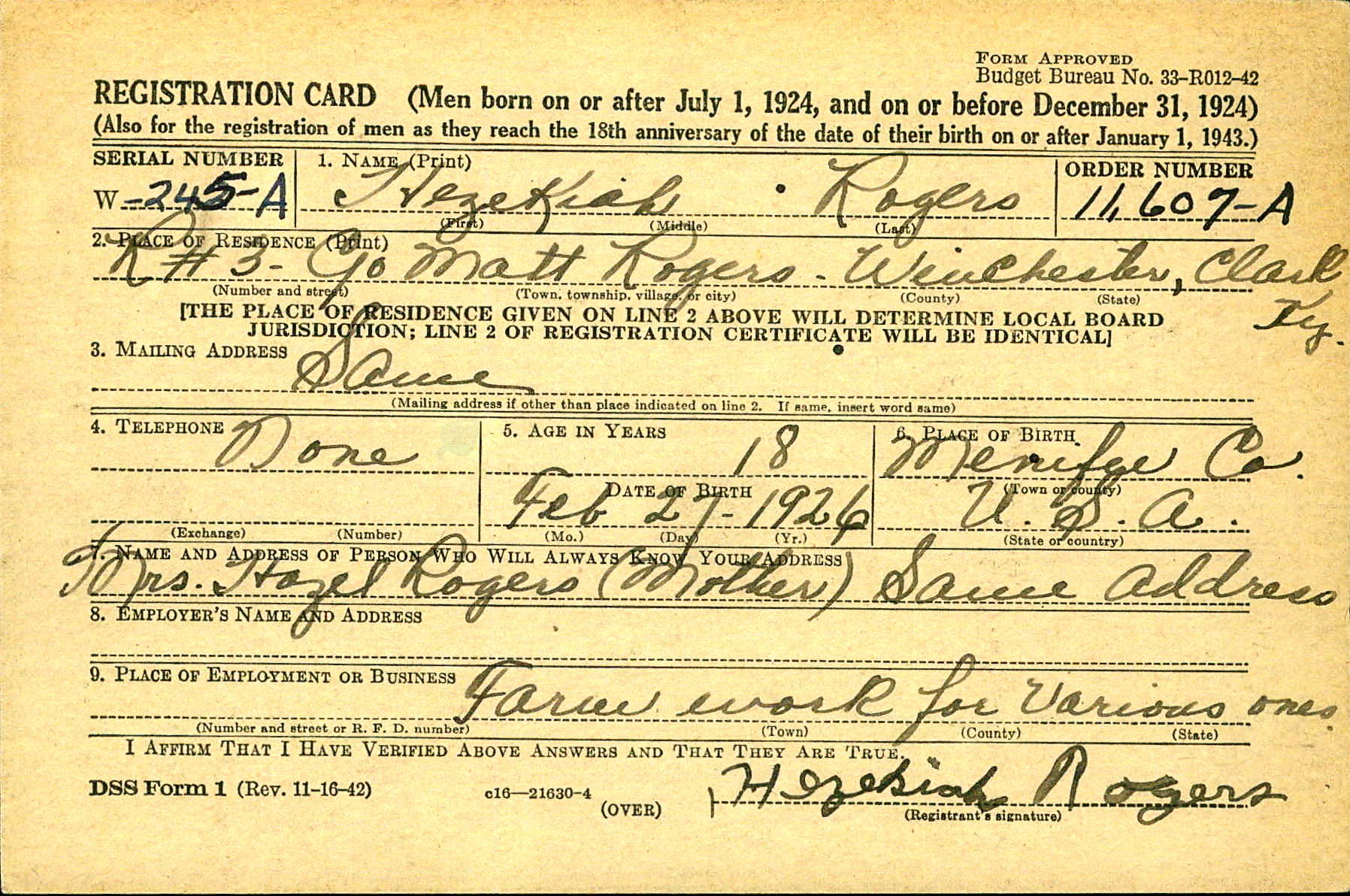
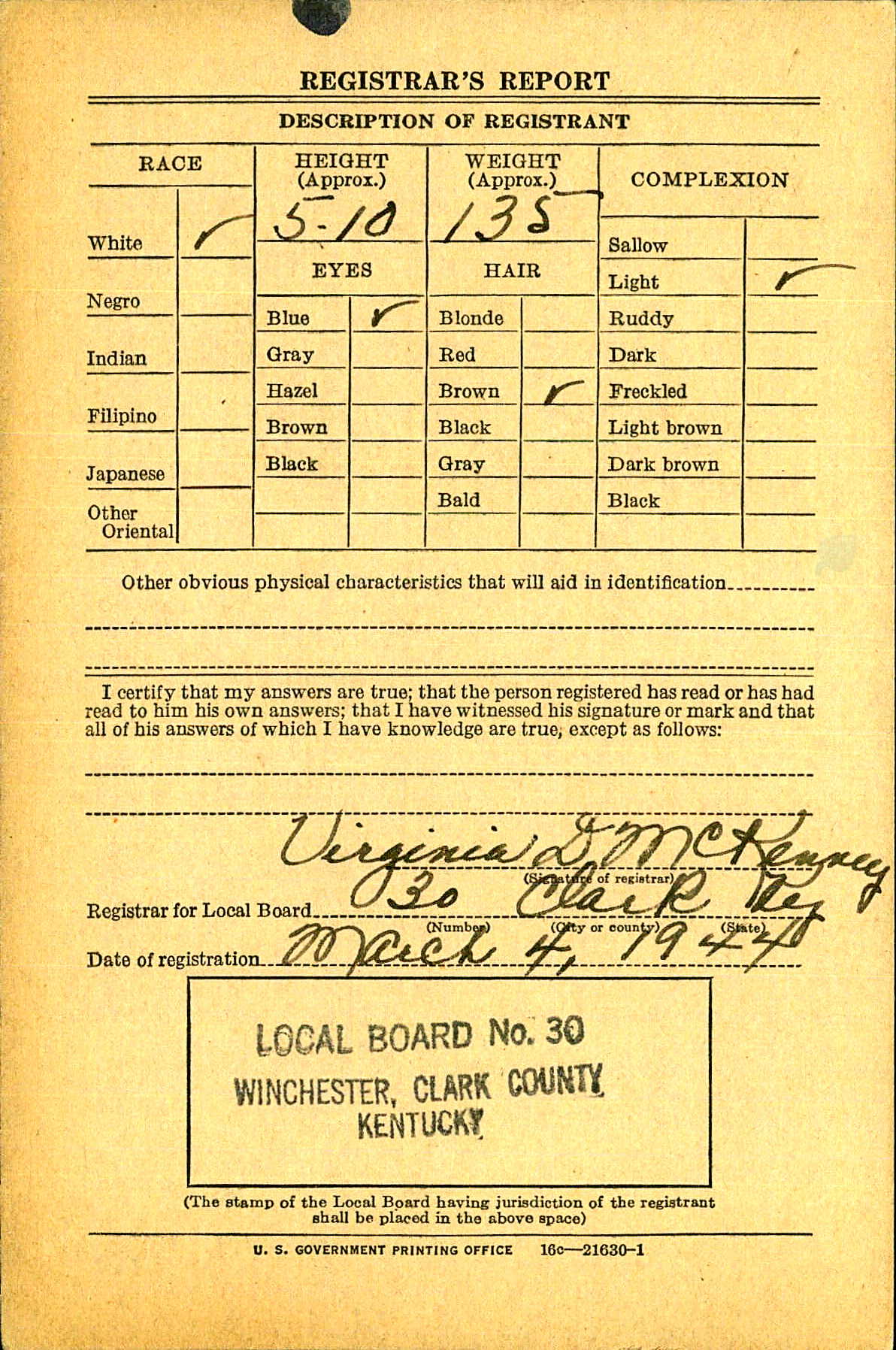
By March 1944, Hez was eighteen years old. On his draft registration card he was living near Winchester in Clark County, Kentucky, and doing farm work for various employers. When asked who would always know where to find him, he gave his mother's name: Mrs. Hazel Rogers.
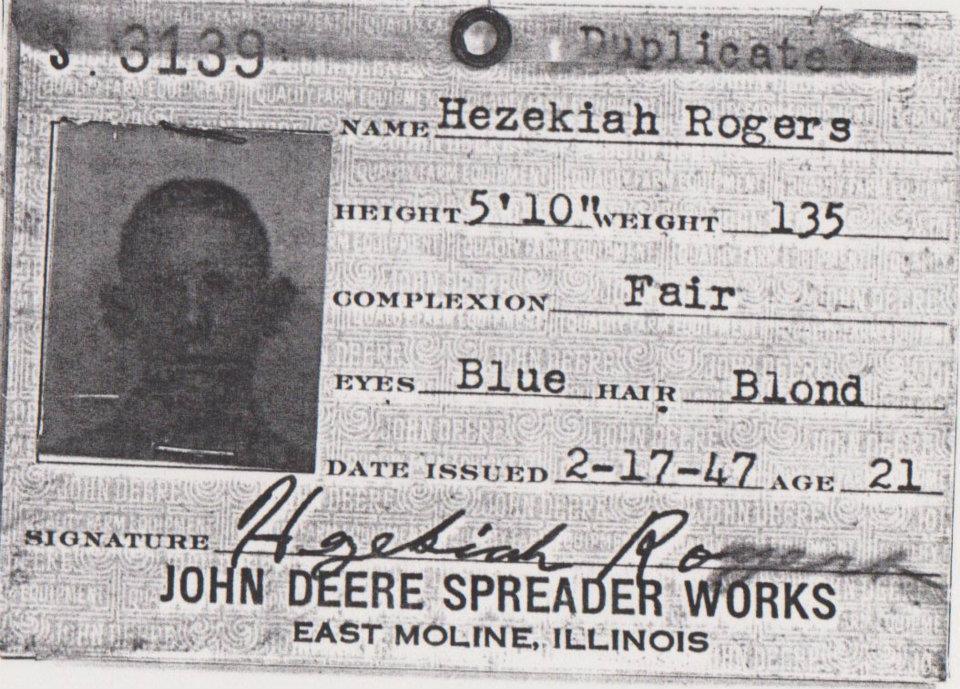
The card gives us one of those little details that makes an old record feel almost alive: Hez stood about five feet ten inches tall, weighed around 135 pounds, and had blue eyes. The draft registrar called his hair brown; a later John Deere identification card called it blond. Either way, the face looking back from the family photographs is unmistakably Hez.
A Young Man in East Moline
Sometime around 1947, Hez left the Kentucky hills behind and went north to East Moline, Illinois. There he found work with Deere & Company at the John Deere Spreader Works. The papers called him a cupola tender, but beyond the job title was a young man beginning a life of his own — working, driving, making friends, and finding his place far from home.
A couple of newspaper notices even catch flashes of the young man behind the records: one for driving a car without a muffler and another for speeding. They are hardly the things that define a life, but they do make me smile a little. They sound like a young fellow with a car, a job, and places he wanted to go.
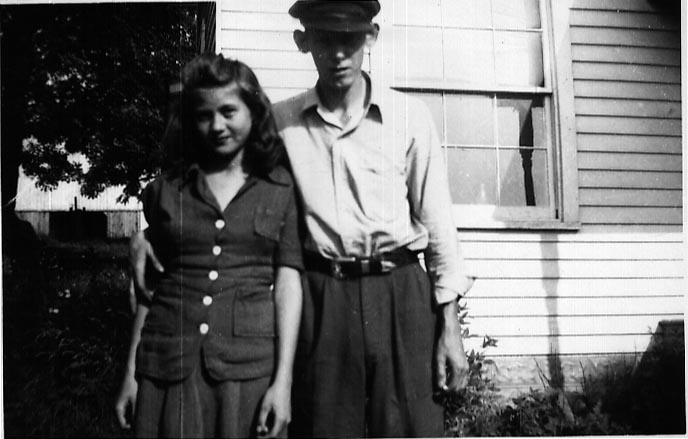
One photograph from those years shows Hez standing beside Georgia Belle, his girlfriend at the time. It is an ordinary young-couple photograph, and perhaps that is what makes it so dear: for a moment there is no accident, no newspaper headline, and no sorrow ahead — only Hez as a young man with someone he cared about.
Things He Left Behind
Some of the most precious pieces of Hez’s story are not in a courthouse or newspaper archive at all. His 1949 Illinois license plate, the envelope it came in, his automobile registration, and several other pieces from his life have survived within the family.
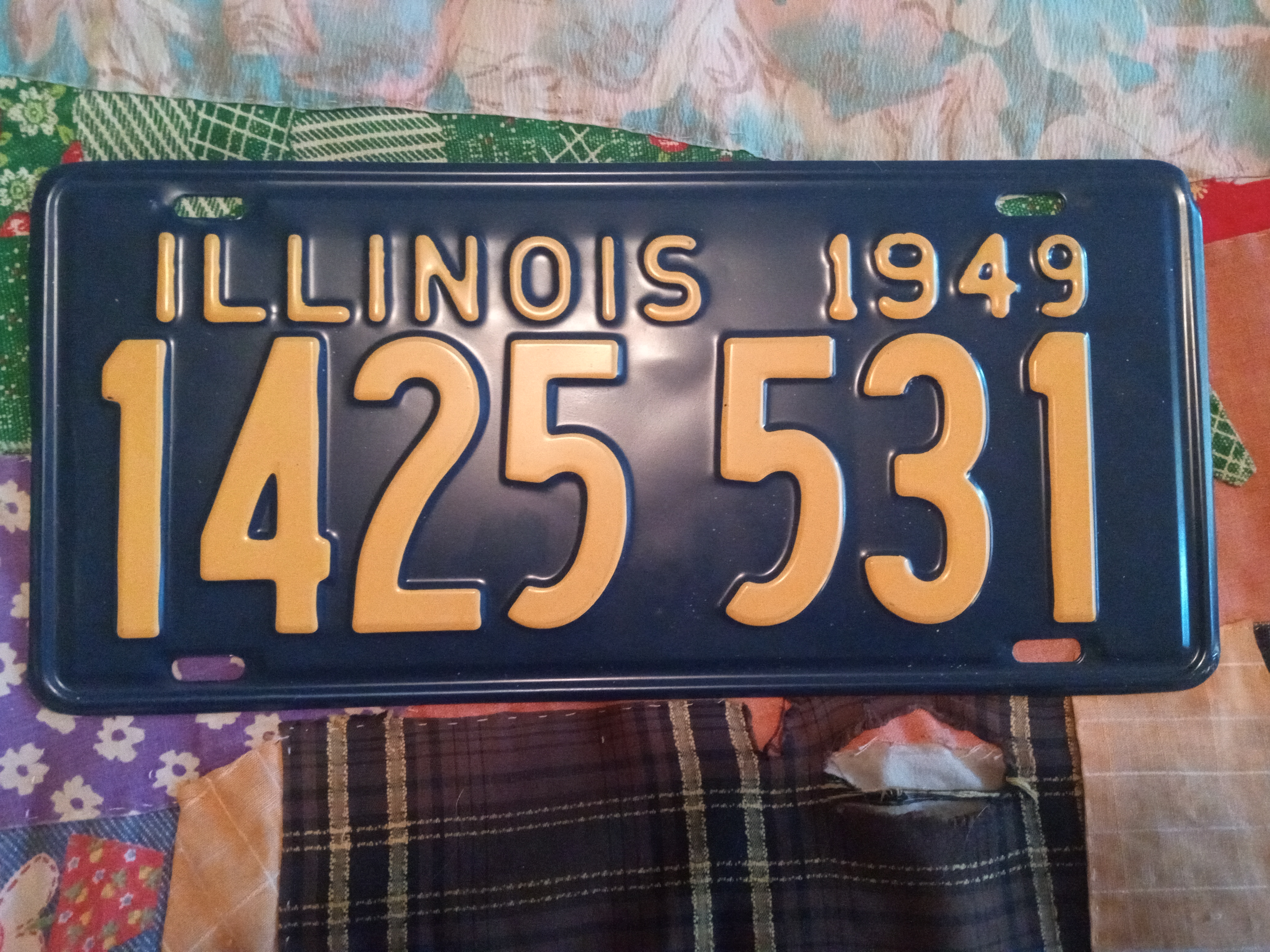
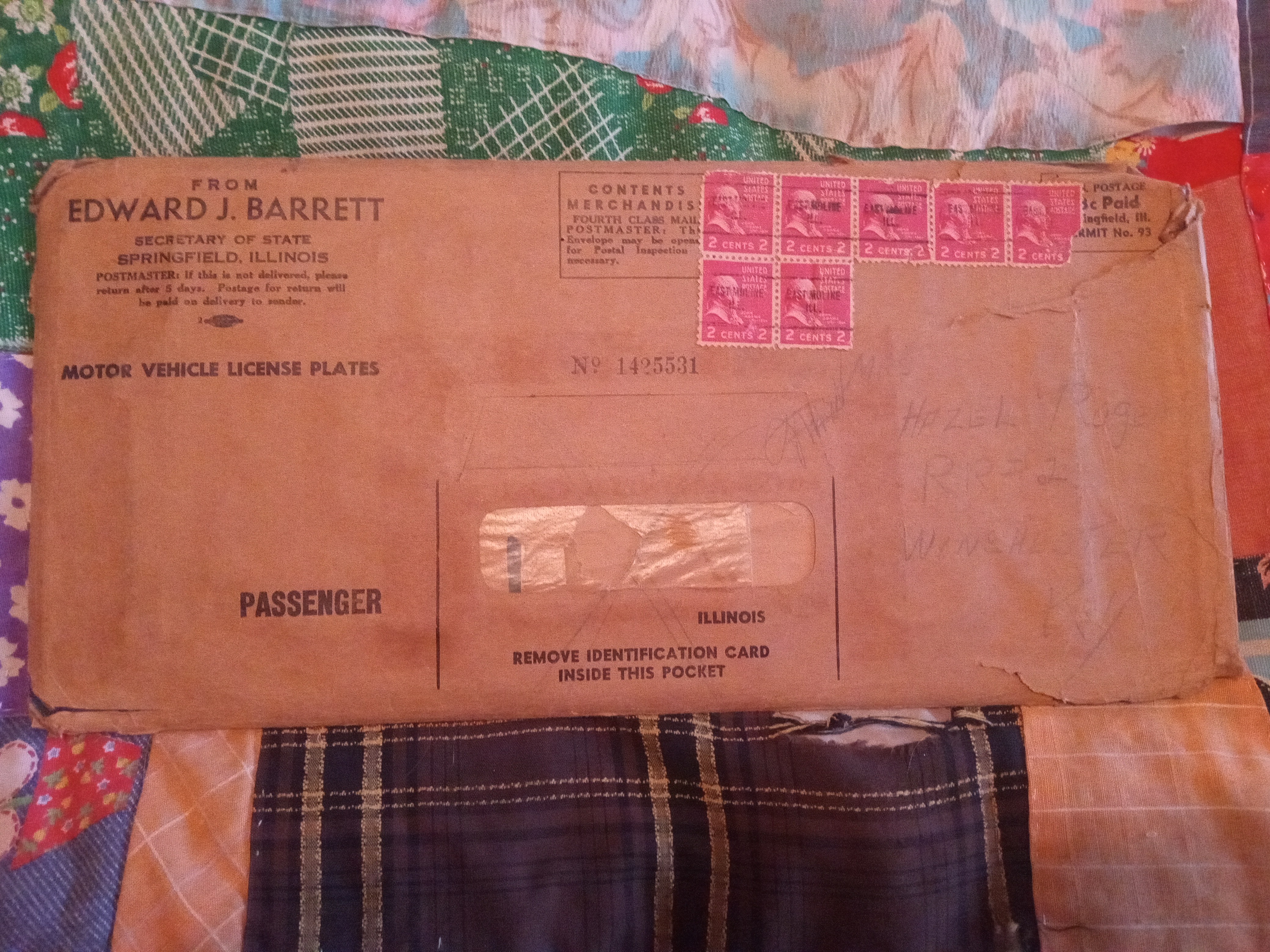
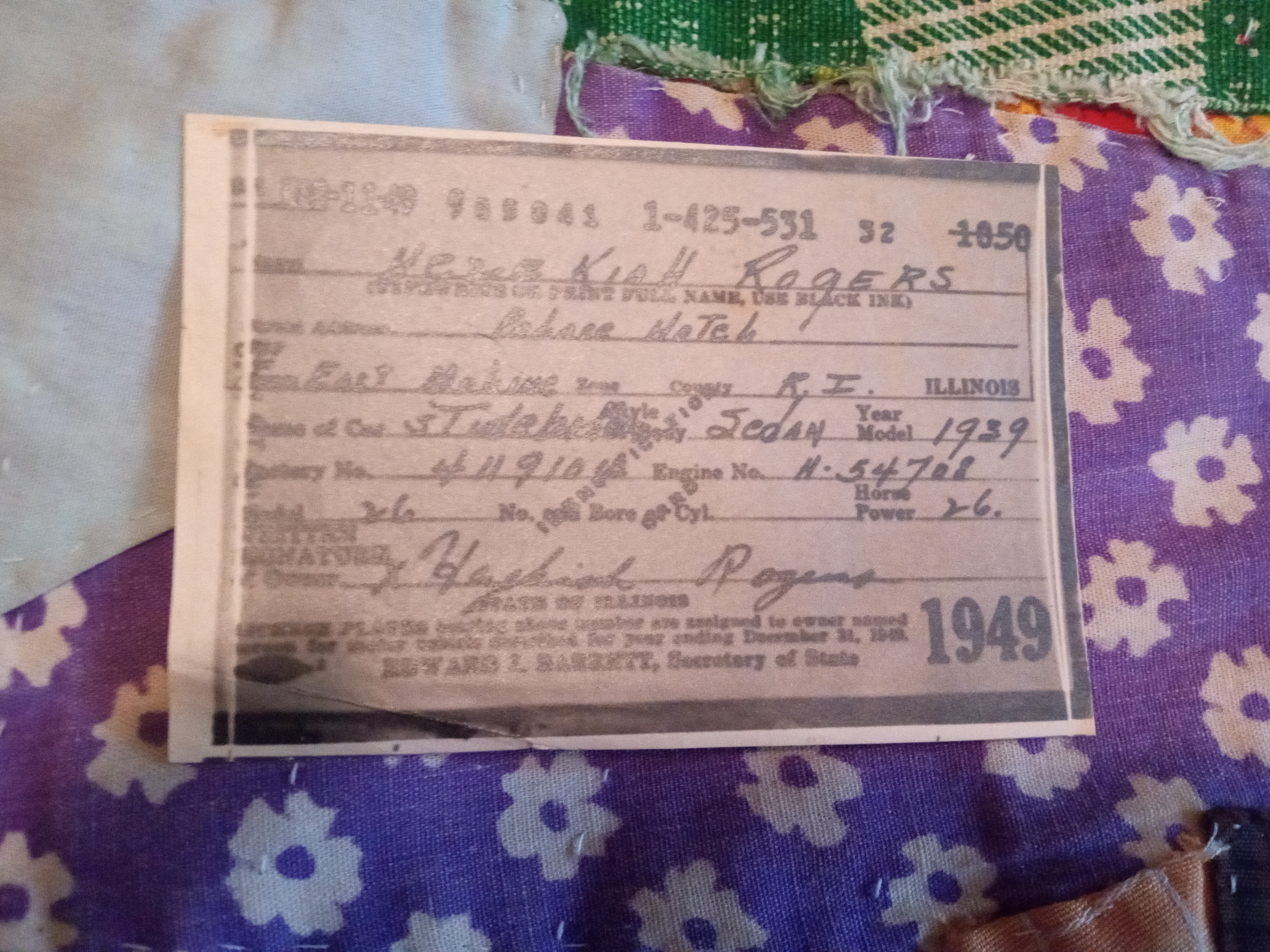
March 1949
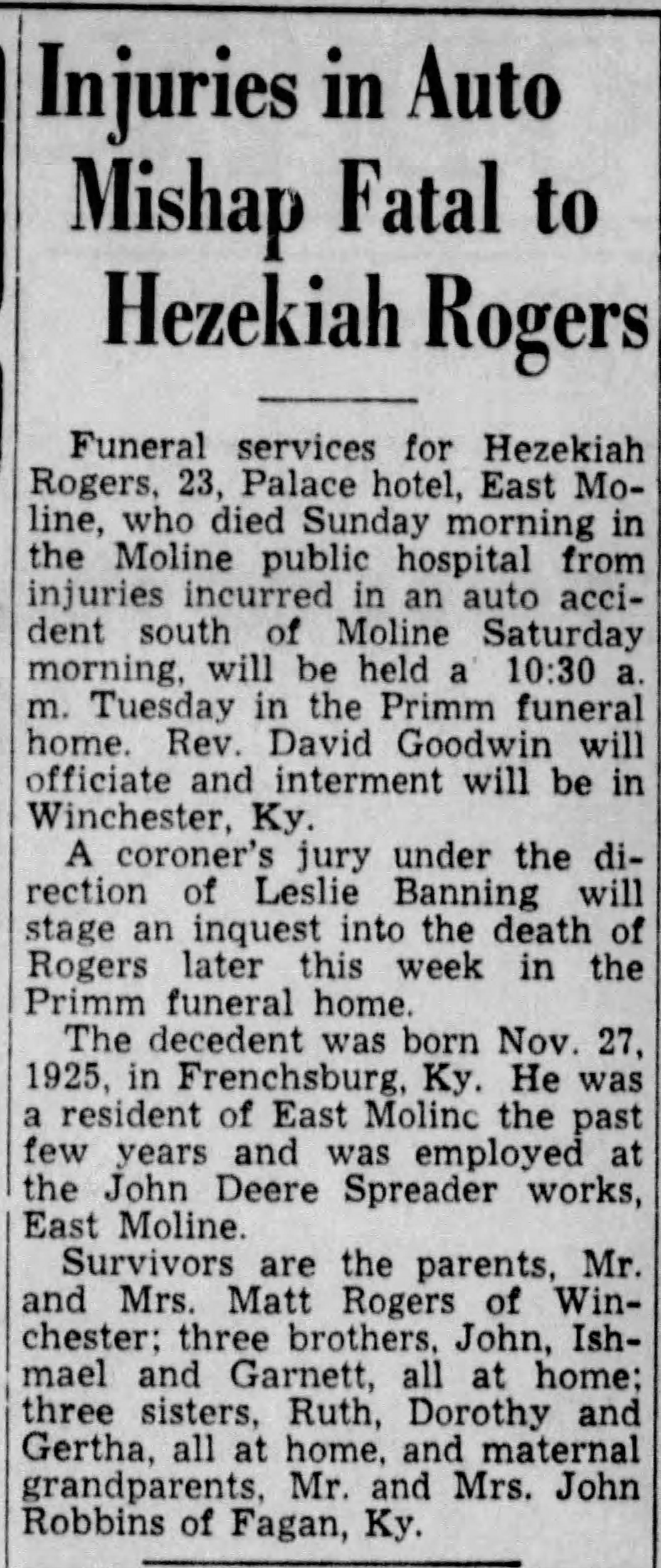
Then came the part of Hez's story the family surely wished could have been rewritten. In the early morning hours of March 5, 1949, he was riding with his coworker Leland Stiefel when their car left Route 150 near Coaltown Road south of Moline and crashed into trees. Both young men were critically injured.
Hez never woke again. He died the following morning, March 6, at Moline Public Hospital. He was only twenty-three years old — far too young for his life to have already reached its last page.
A coroner's jury later returned a verdict of accidental death. Later newspaper coverage also revealed that the stretch of highway had become known locally as a dangerous place, with several crashes occurring in the same vicinity over a short period of time.
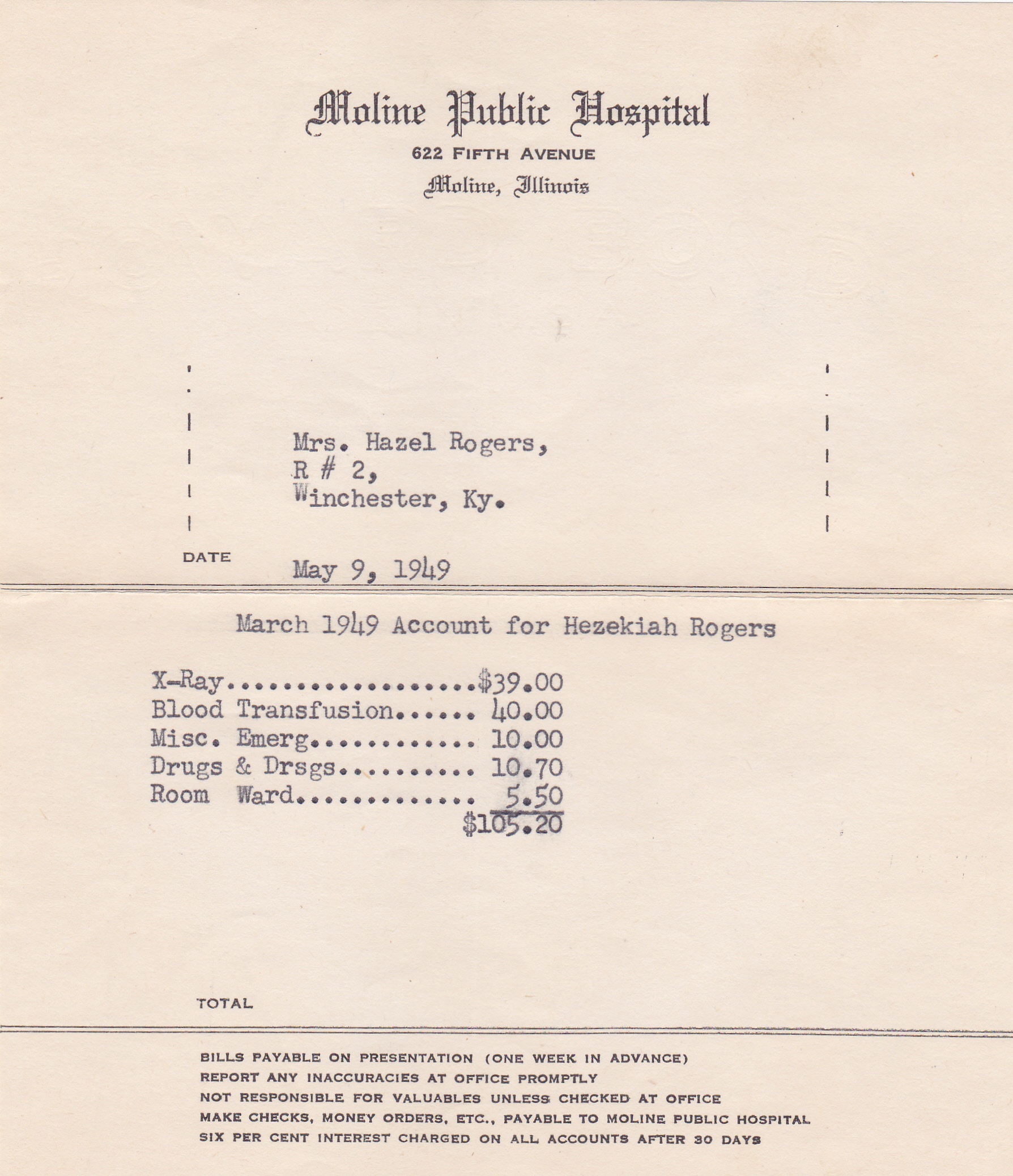
Hez's hospital account, mailed to his mother Hazel in May, survives among the family's papers. It records the X-ray, blood transfusion, emergency care, medication, and ward charges from the final effort to save his life.
Home to Kentucky
After services in East Moline, Hez began one final journey home. His body was returned to Kentucky, taken to the Scobee funeral home in Winchester, and then carried on to Menifee County.
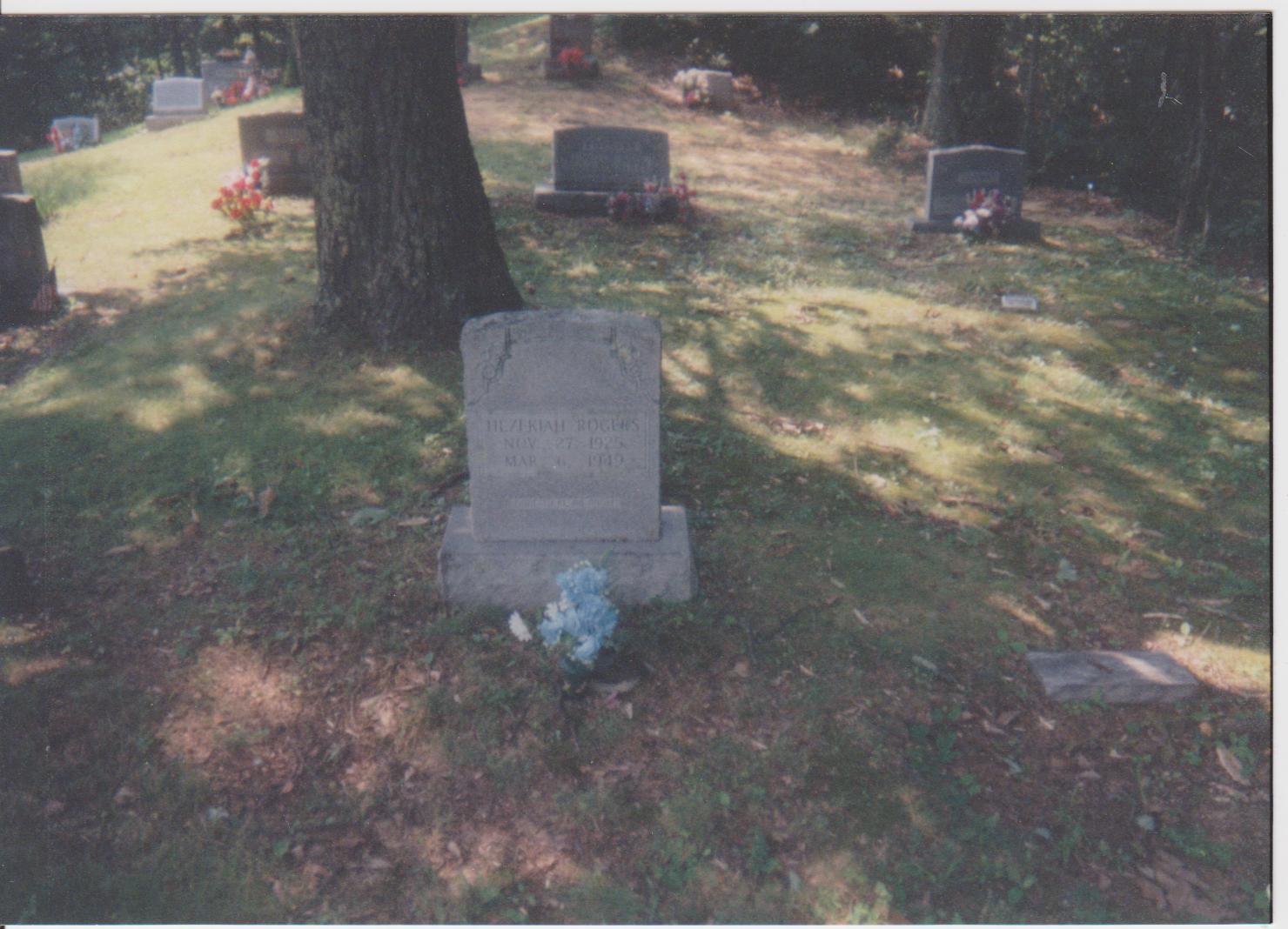
Hezekiah Rogers was laid to rest in Fagan Cemetery, among the people and places that had shaped his childhood. He had gone away to make a life for himself, but in the end Hez came home to the Kentucky hills.
Afterward
There were inquests, court papers, lawsuits, and settlements after Hez died. They help us understand what happened, but they cannot tell us what it felt like for the family to lose a son and brother who had only just begun making his own way in the world.
The part of Hez's story I treasure most never appeared in a courthouse record or newspaper. It lived in Daddy's memory. He remembered an older brother who watched out for him when childhood was difficult. That small piece of family remembrance says more about Hez than any official paper ever could.
Remembering Hez
Hezekiah Rogers lived only twenty-three years, but a life does not have to be long to leave a mark. Photographs preserve the face of the boy and young man he was. Records tell where he lived and worked. His license plate and papers survive as things he once held in his own hands.
And through my father's memory, something still more important survives: the picture of an older brother who noticed when his younger brother needed him and quietly stepped in. It is only one memory from a life cut far too short, but it tells us something about the heart of the young man behind all these photographs and records.
That is the Hez I want this quilt block to remember.