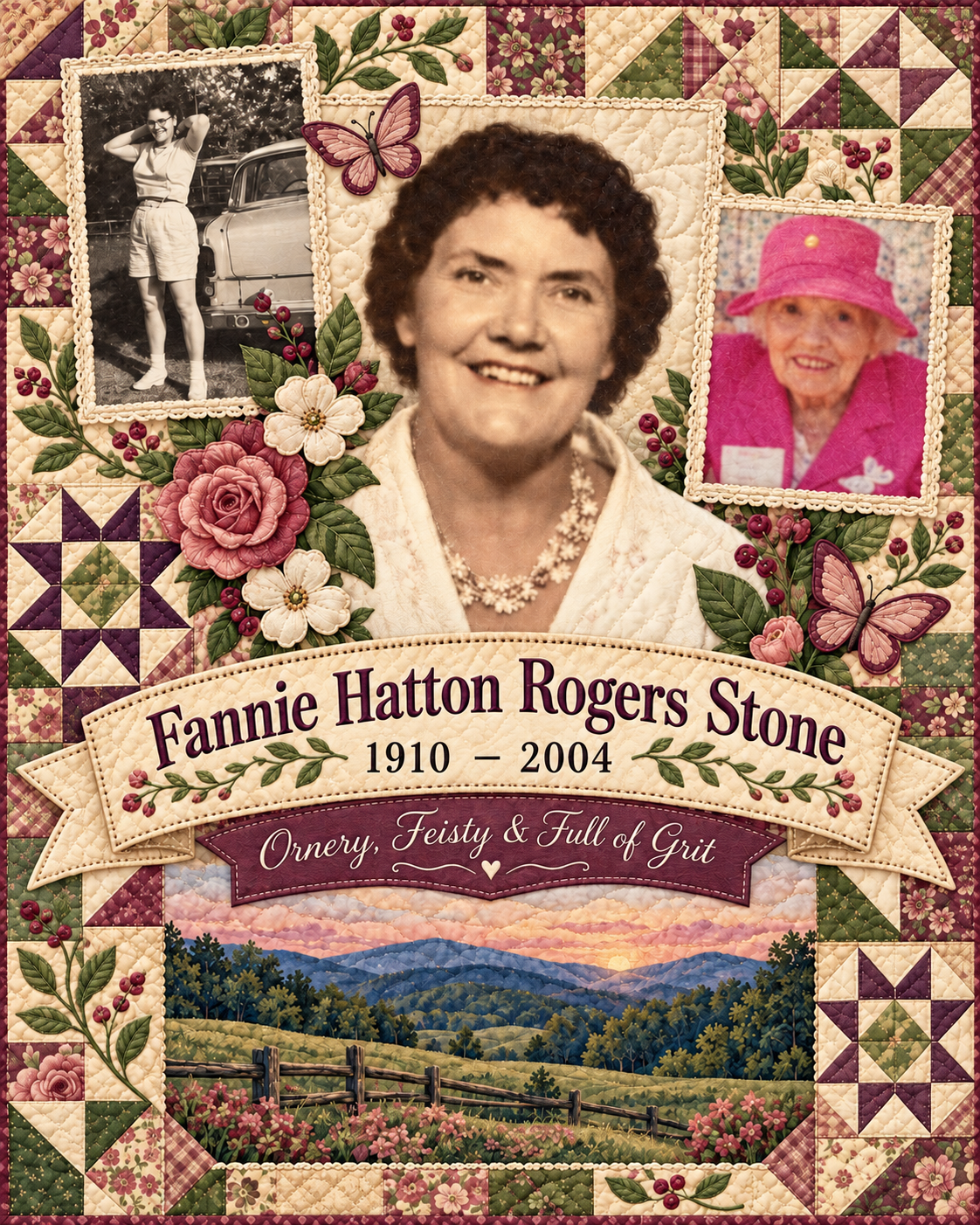
Born in the Kentucky Hills
Fannie was born May 12, 1910, in the Fagan area of Menifee County, Kentucky, the daughter of John Henry “Bud” Hatton and Mary Ellen “Mollie” White Hatton. Her death certificate later recorded the same birth date and named John Henry Hatton and Mary Ellen White as her parents.
Family memory and the booklet created for her in 1991 preserve a vivid picture of her childhood. Fannie said that she followed her father nearly everywhere. Her mother, Aunt Mollie, was a midwife and was often away from home attending births, so Fannie remembered spending many of her happiest early years close to her father and to the countryside around them.
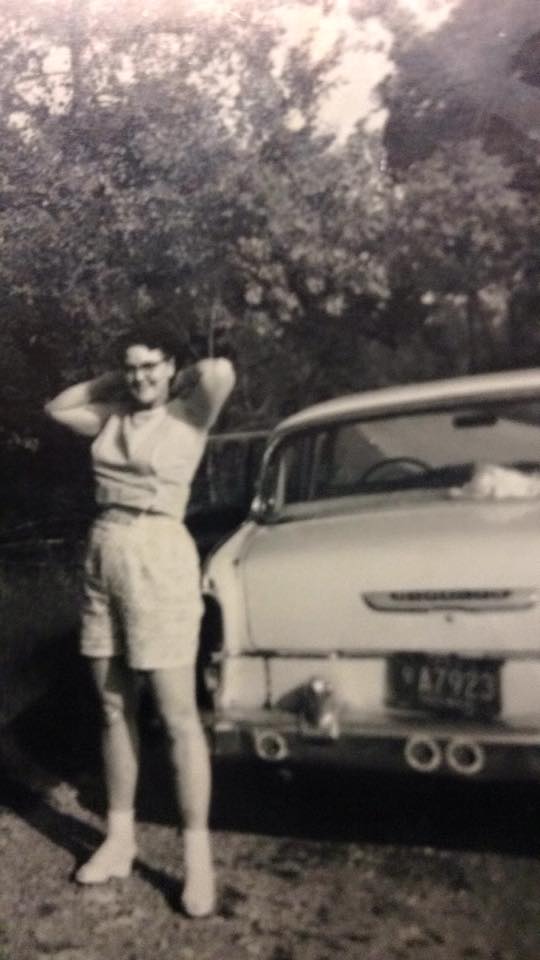
Fannie in younger years.
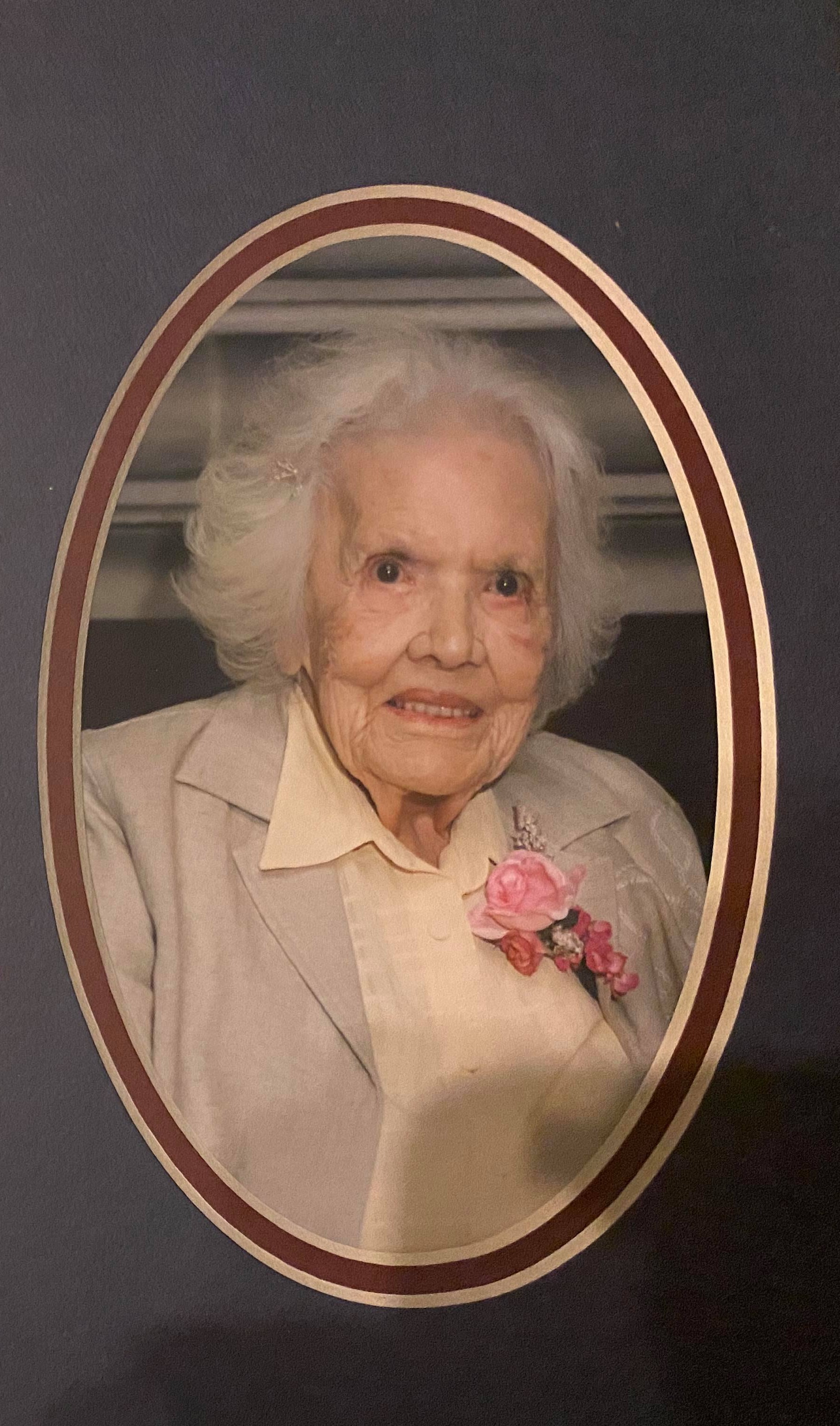
A later portrait of Fannie.
A Childhood She Remembered
In her own recollections, Fannie told of going to the Blue Hole with her cousin Vernon Hatton to fish and swim, coon hunting, riding a race horse that belonged to her Uncle George Hatton, sleigh rides in winter, climbing trees, swinging from limbs, and plowing corn fields with a mule and turning plow.
“I always loved being outside.”
She also remembered going through the eighth grade more than once simply so she could stay in school. Her stories make it clear that she was independent, adventurous, and not especially easy to frighten even when she was young.
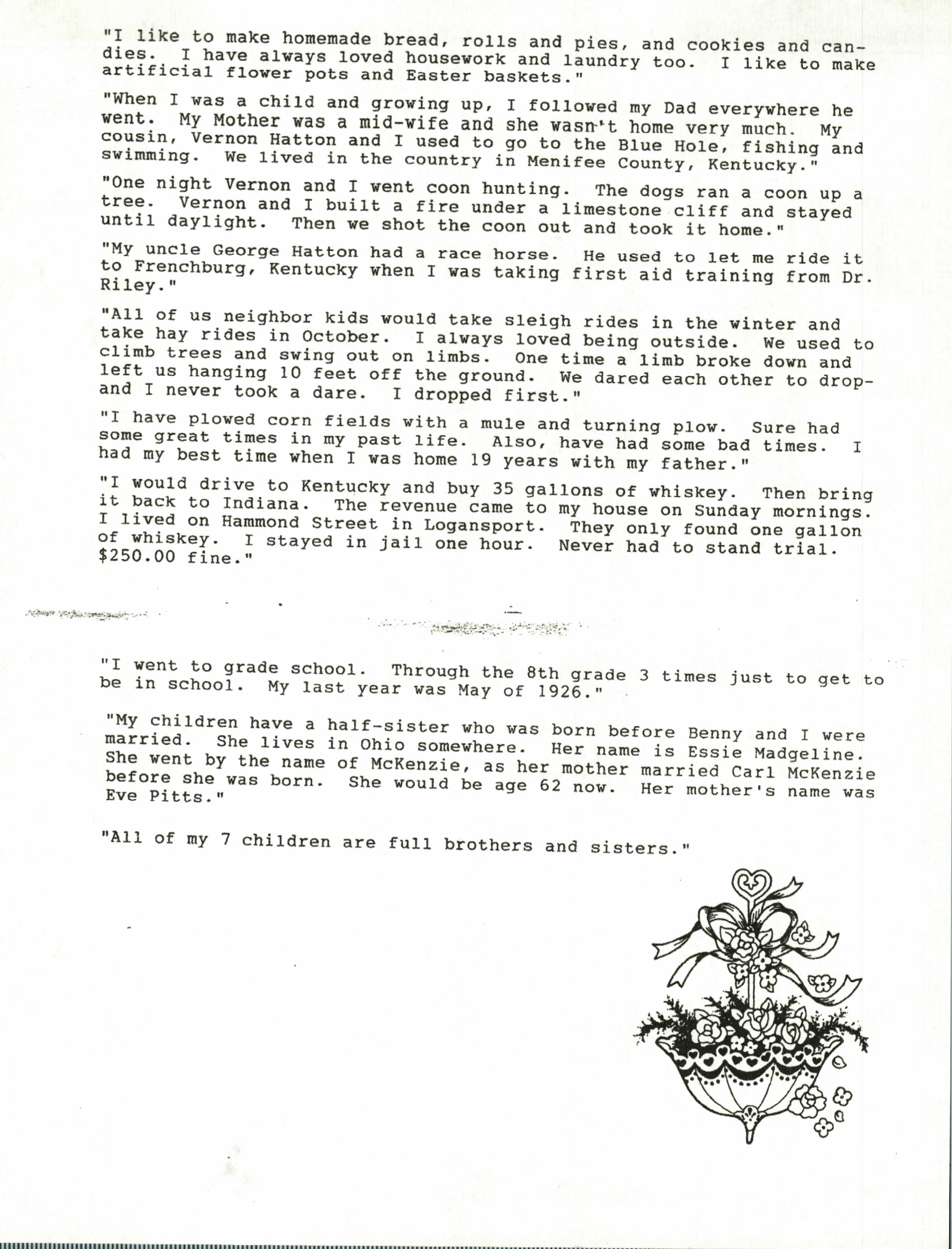
Fannie’s own recollections, preserved in the family booklet.
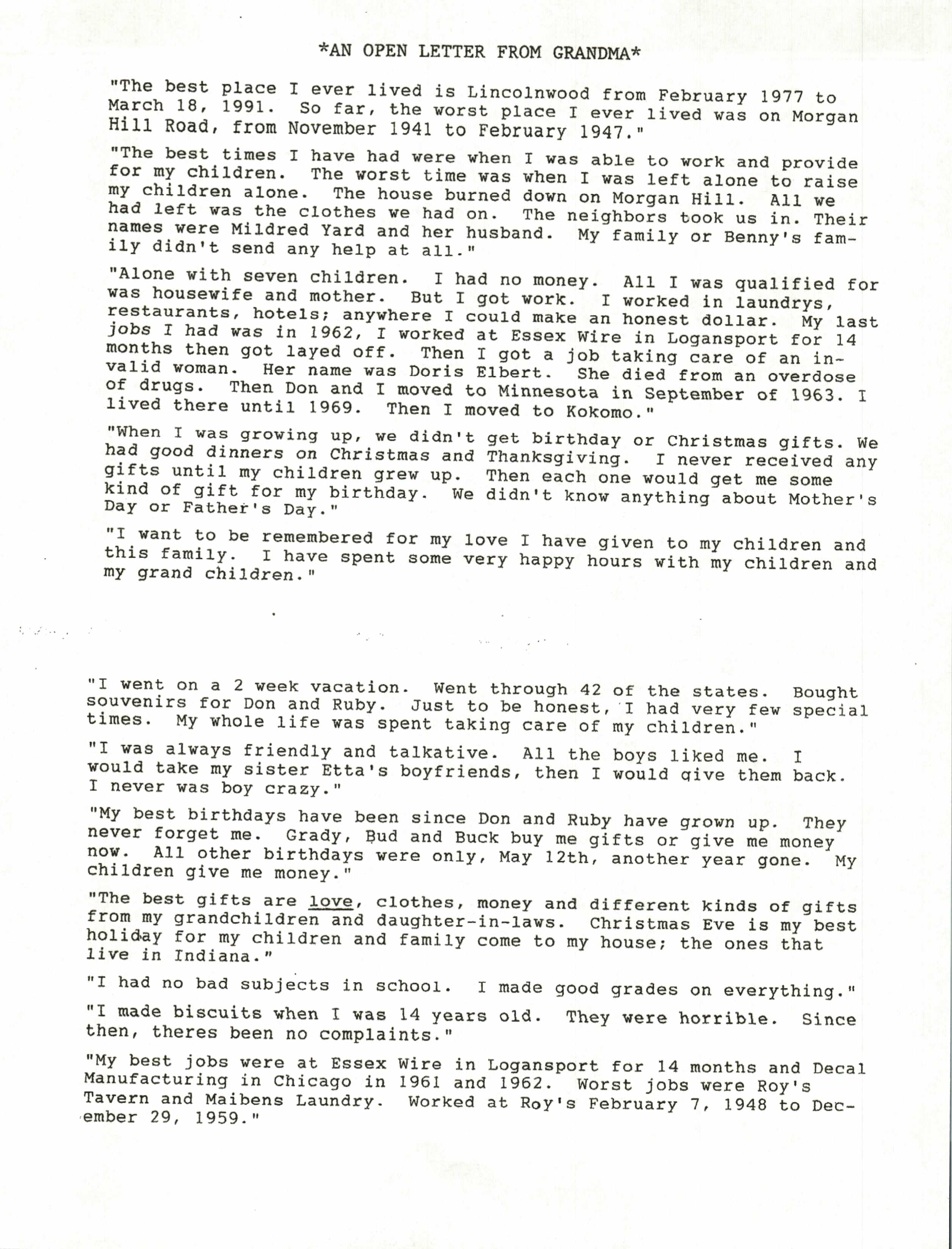
“An Open Letter from Grandma,” in Fannie’s own words.
Fannie & Bennie
Fannie married Bennie Rogers on July 29, 1929, in Menifee County, Kentucky. The county marriage index lists Bennie Rogers and Fannie Hatton, while a handwritten note from Fannie herself also gives the date July 29, 1929.
The marriage joined two families that were already closely connected. Fannie’s sister Etta Hatton married Bennie’s brother Bud Rogers, making the two Hatton sisters wives of two Rogers brothers.
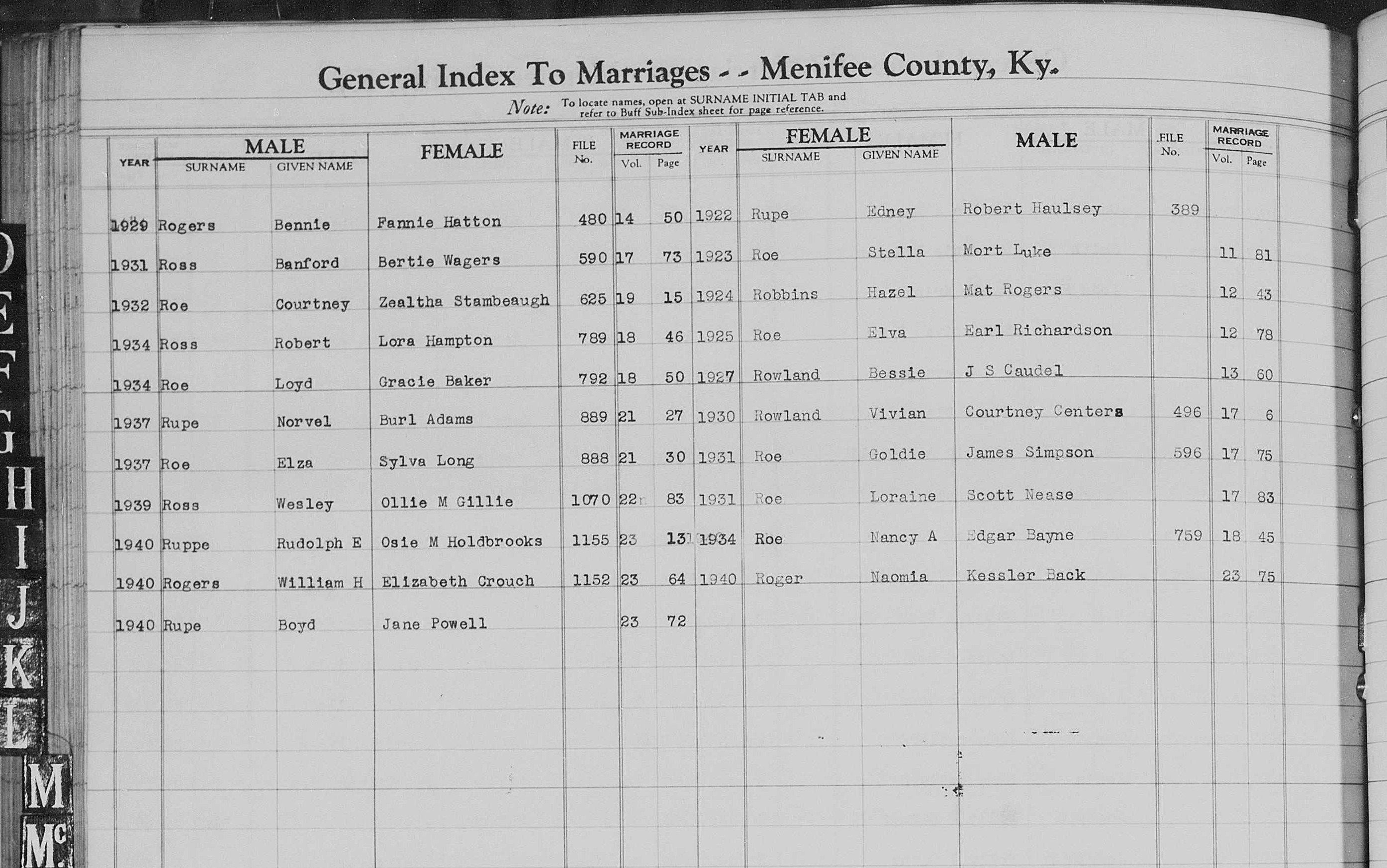
Menifee County marriage index for Bennie Rogers and Fannie Hatton.
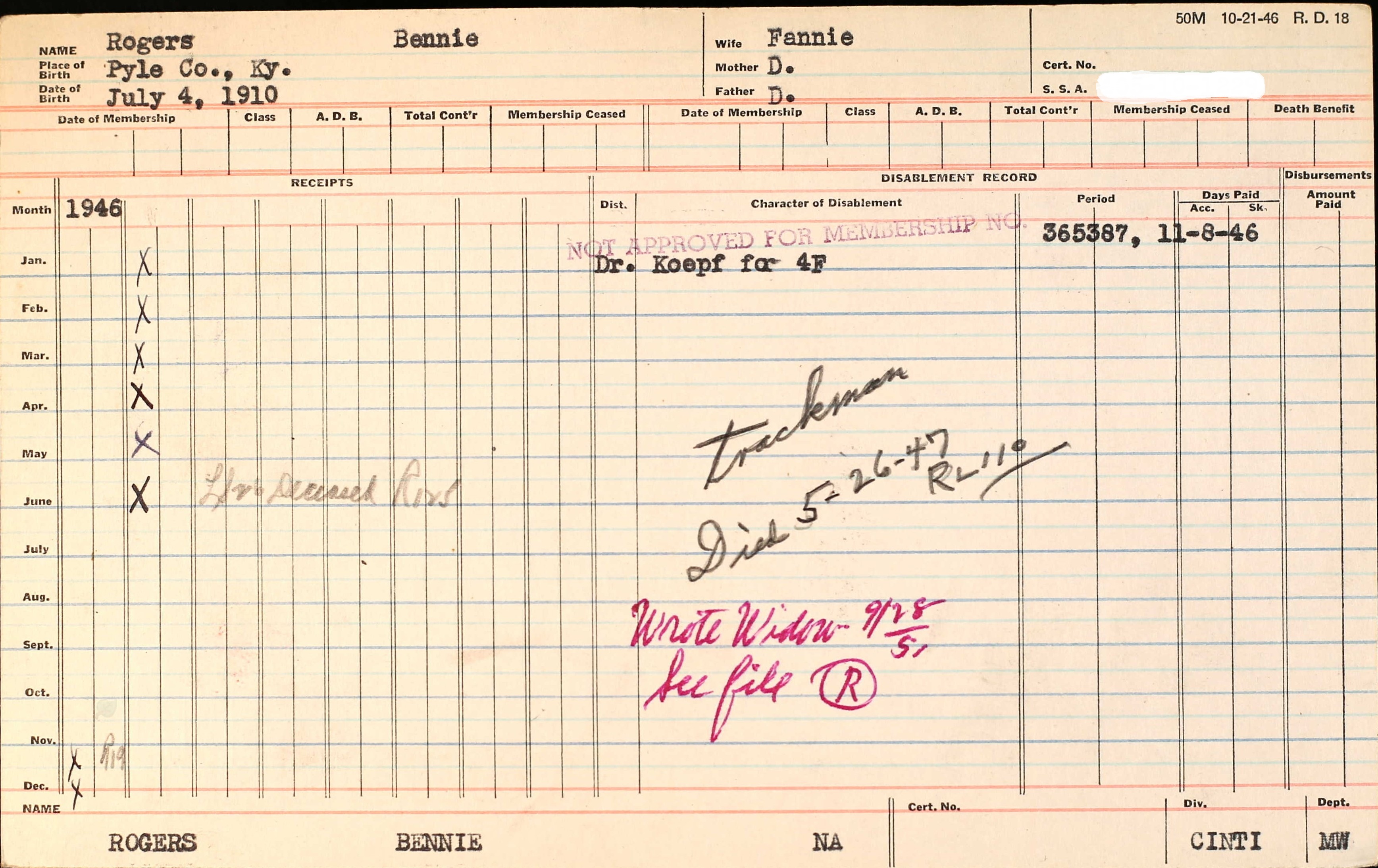
A 1946 Pennsylvania Railroad workers’ relief card naming Fannie as Bennie’s wife. The card recorded his birthplace as “Pyle Co., Ky.”; other family records identify his birthplace as Powell County, Kentucky.
Seven Children & a Hard Road
Fannie and Bennie became the parents of seven children: Nell, Buck, Bud, Asa, Grady, Ruby, and Don. Family writings repeatedly return to the way Fannie kept her children together despite poverty, loss, hard work, and years when material things were scarce.
In May 1947, Bennie died after suffering a skull fracture. Contemporary newspaper reports said his car had overturned several times near the family home. Because he had been involved in an altercation shortly before the wreck, authorities also investigated whether injuries from that fight had contributed to his death. Fannie pressed for answers, and a coroner’s inquest was planned.
Later family members continued to question the circumstances of Bennie’s death, but the surviving newspaper reports do not establish exactly what happened. The records do show that Fannie was suddenly left to raise seven children.
“Alone with seven children. I had no money.”
In her own account, Fannie said the best times of her life were when she was able to work and provide for her children. She said she had been trained only as a housewife and mother, but she went to work wherever she could make “an honest dollar.”
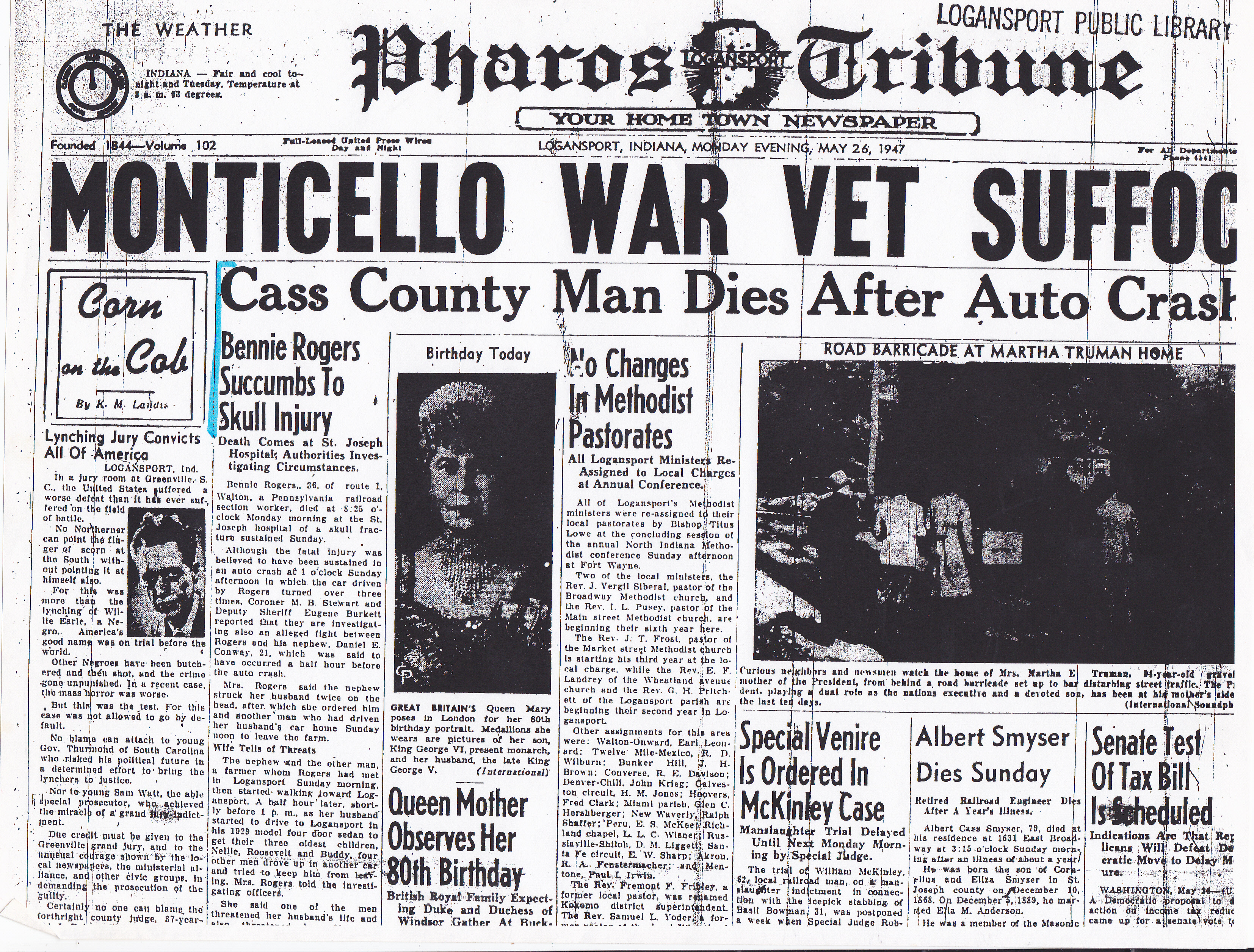
The 1947 report of Bennie Rogers’ death and the investigation that followed.
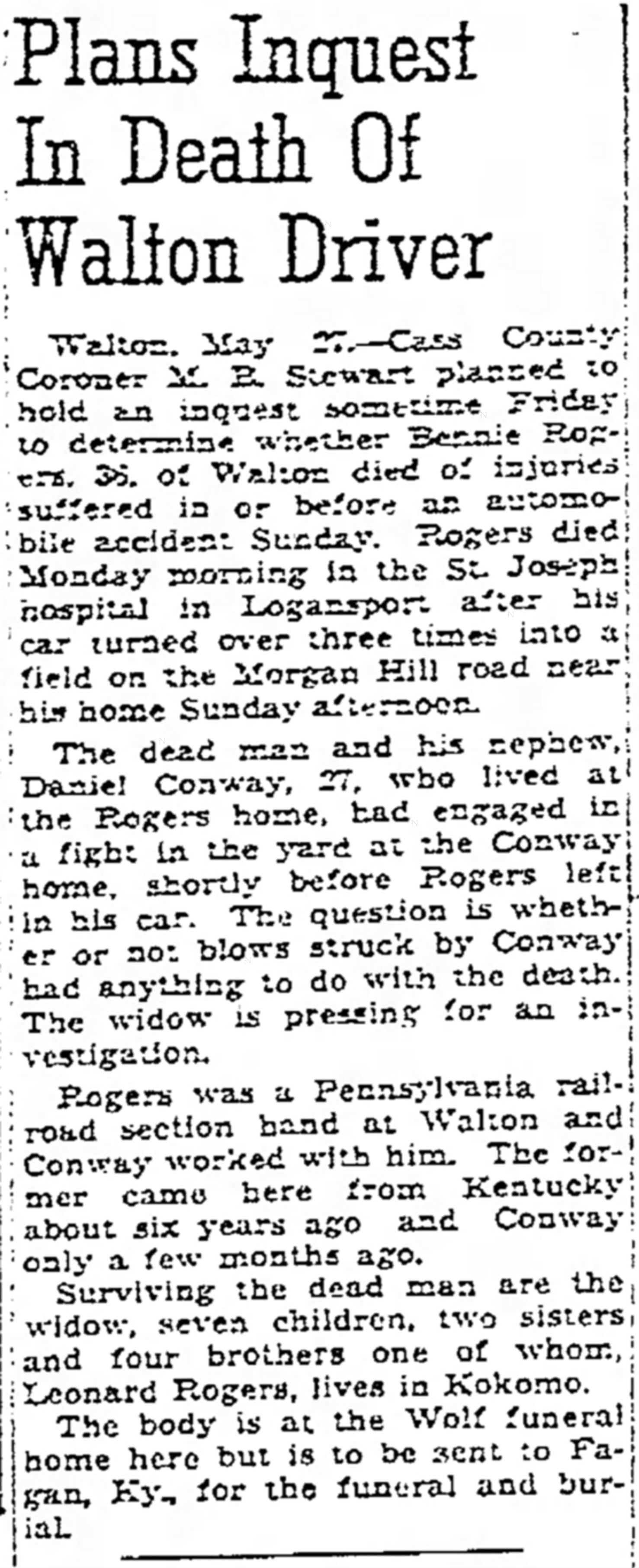
A coroner’s inquest was planned to determine whether Bennie’s fatal injuries came from the crash or from injuries sustained beforehand.
Starting Again
Fannie’s own writing records another devastating chapter: the family home on Morgan Hill burned. She remembered that they were left with only the clothes they were wearing. Neighbors Mildred Yard and her husband took the family in.
She worked in laundries, restaurants, hotels, and wherever else she could find work. She later worked at Essex Wire in Logansport, and at Decal Manufacturing in Chicago in 1961 and 1962. At one point she cared for a woman named Doris Eibert, and she later moved with Don to Minnesota before eventually returning to Kokomo.
Her life was spent working, raising children, moving when necessary, and doing whatever she could to keep the family going.
Ornery, Feisty & Full of Grit
The family did not remember Fannie as timid. Her children described her as someone who would stand up for herself and for them. Don wrote that she “would fight a wild cat” and remembered seeing her knock a man off his seat after he slapped her.
That same streak lasted well into old age. One family memory tells of a visit to Fannie in the nursing home. She wanted a can of chicken noodle soup. When an aide told her she could not have it, Fannie got angry and threw the can of soup at the aide.
There were other stories too: driving an old 1954 Chevrolet with a trailer, stopping along the road to try to cut deer horns off with a knife, cooking a full meal at midnight after work, and leaving eggs boiling on the stove until they exploded loudly enough to wake everyone in the complex.
And Then There Was the Whiskey...
Fannie herself wrote that she would drive to Kentucky, buy thirty-five gallons of whiskey, and bring it back to Indiana. She said revenue men began coming to her house on Sunday mornings. According to her own account, they found one gallon, she spent one hour in jail, paid a $250 fine, and never had to stand trial.
Family booklet material sometimes contains mistakes or stories remembered differently over time. This page keeps Fannie’s own version intact while distinguishing it from official records.
The Cook Everyone Remembered
Food appears again and again in the family memories of Fannie. She said she liked to make homemade bread, rolls, pies, cookies, and candy. Family members remembered banana cream pies, peach cobbler, pancakes, fried chicken, big Sunday dinners, and meals cooked even after a long shift at work.
She also remembered learning to make biscuits at fourteen.
“They were horrible. Since then, there’s been no complaints.”
Her son Buddy wrote that there would never be anyone else who could cook like his mother. Grandchildren remembered coming to her house knowing that food, cards, stories, and laughter were usually waiting.
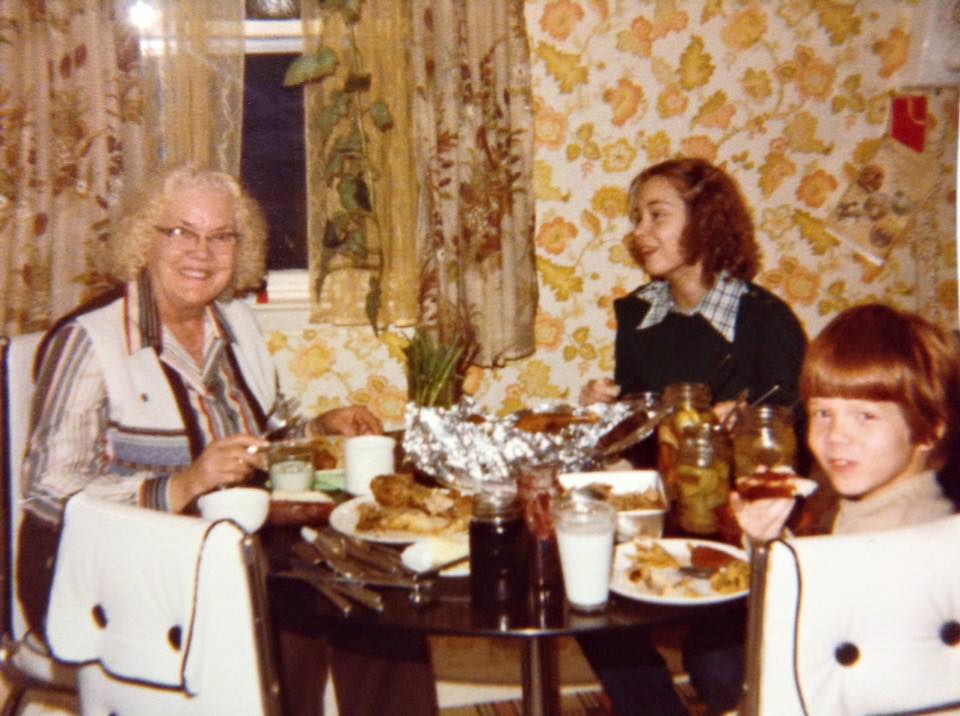
Family and food were often at the center of Fannie’s happiest memories.
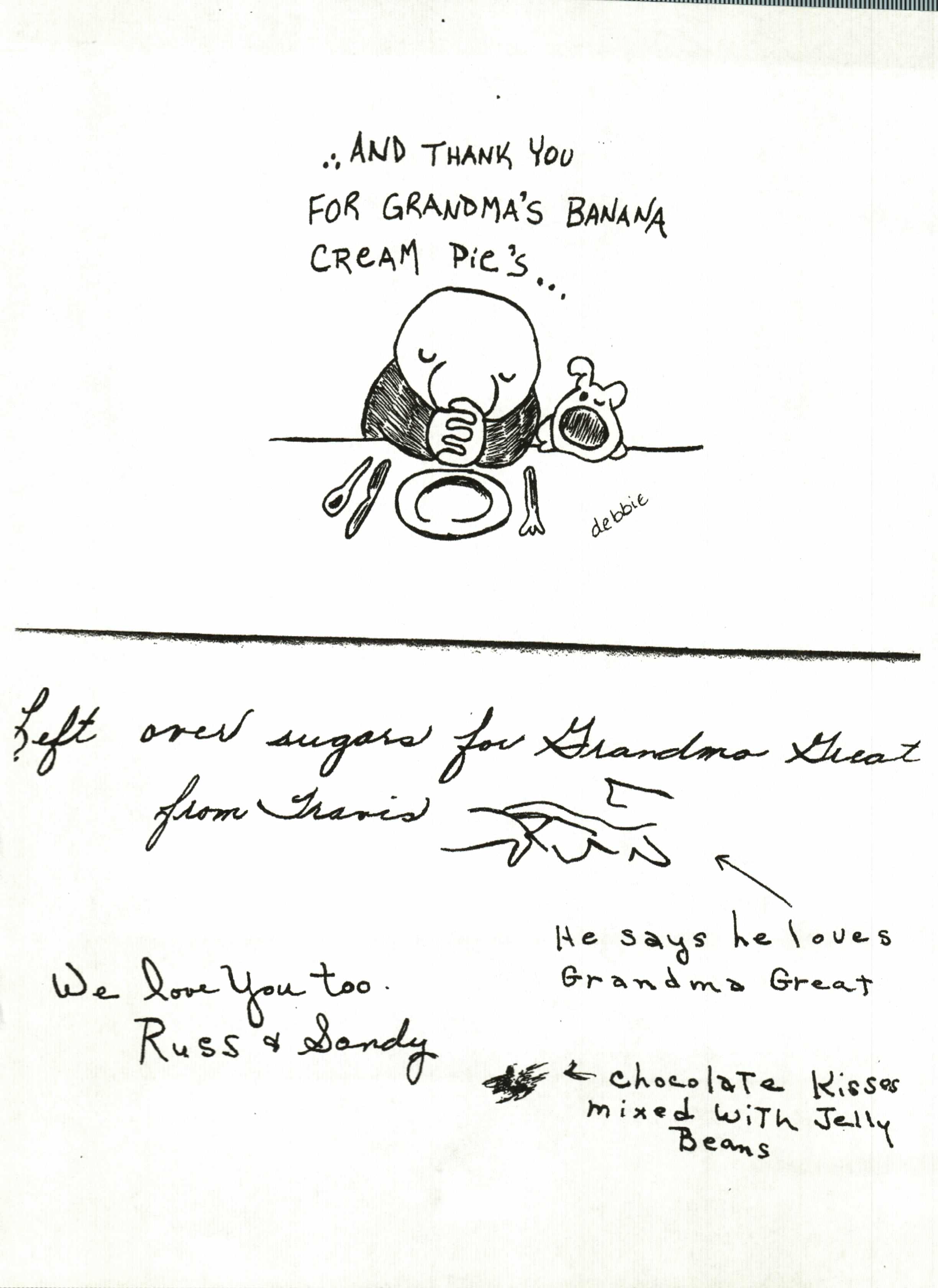
A little family thank-you for Grandma’s banana cream pies.
Grandma’s House
The memories written by Fannie’s children and grandchildren give a picture of a house that was rarely just a house. It was a place for card games, wrestling on television, candy-store trips, late nights, pizza, plants, stories, cooking, Sunday dinners, and grandchildren who knew they were welcome.
Grandchildren remembered her rubbing their backs and hair when they could not sleep, making big bowls of rice in the morning, buying white tennis shoes at K-Mart, sending plants home with visitors, telling childhood stories, and making peach cobbler good enough to be remembered decades later.
“No one has a Grandmother like I do; one who is never selfish, always thinking of others.”
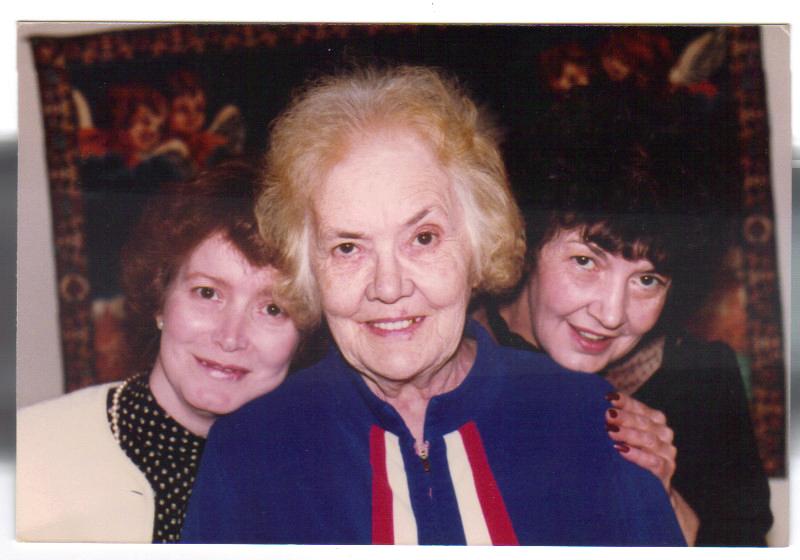
Fannie surrounded by family.
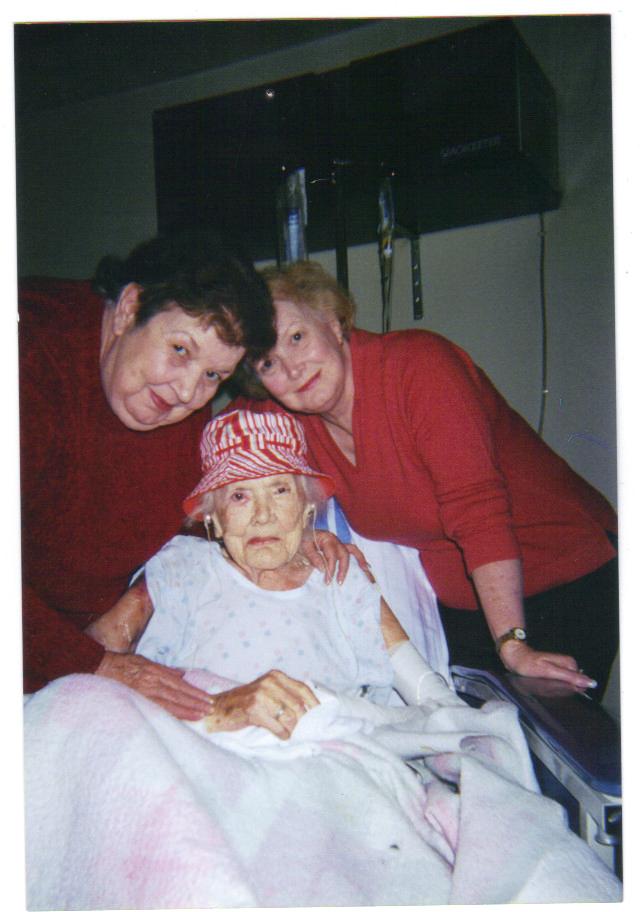
Three generations of family memory gathered together.
The Things Fannie Loved
The 1991 booklet included a page of “Grandma’s Favorites,” preserving small details that ordinary records never capture.
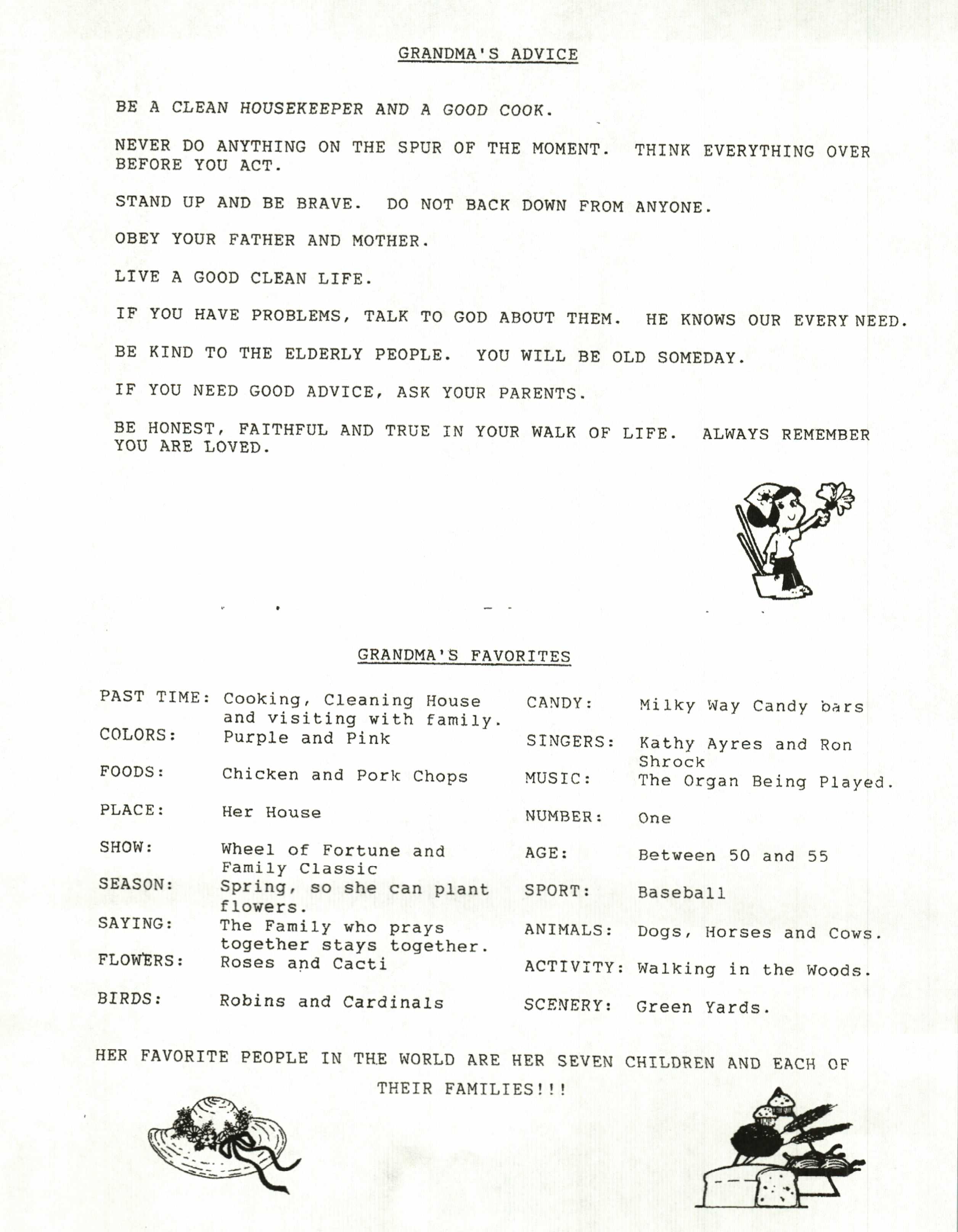
Grandma’s advice and favorites, preserved by the family.
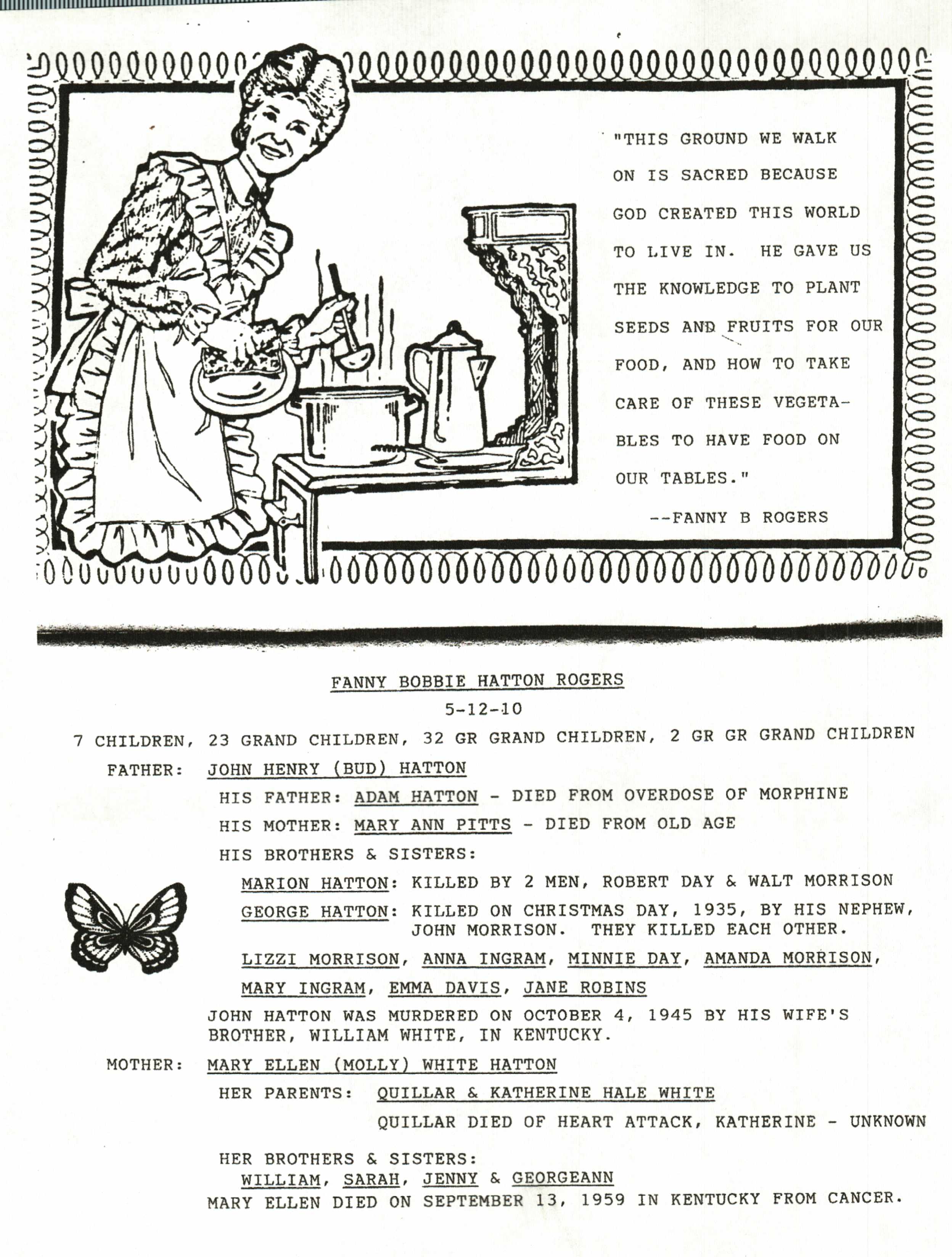
One of the family booklet pages preserving Fannie’s story.
What She Wanted Remembered
Among all the stories of hardship, work, family, food, stubbornness, moving, and making do, Fannie left a simple statement about how she hoped to be remembered.
“I want to be remembered for my love I have given to my children and this family.”
That wish is echoed throughout the family booklet. Her children wrote about what she endured after Bennie died, how hard she worked, how she kept the family together, and how much more they understood her sacrifices after they grew older and raised children of their own.
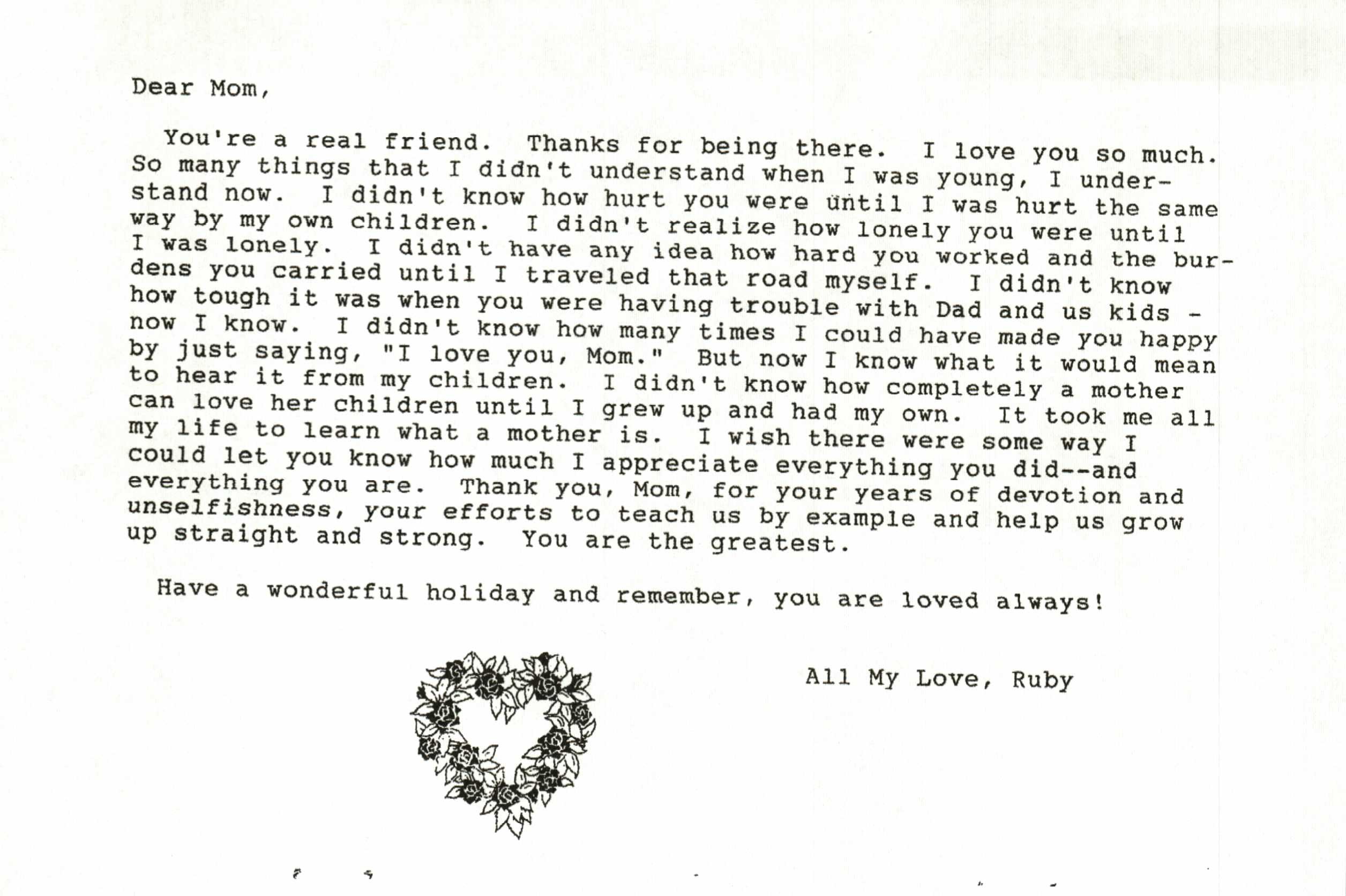
One of Ruby’s letters reflecting on what she learned about her mother.
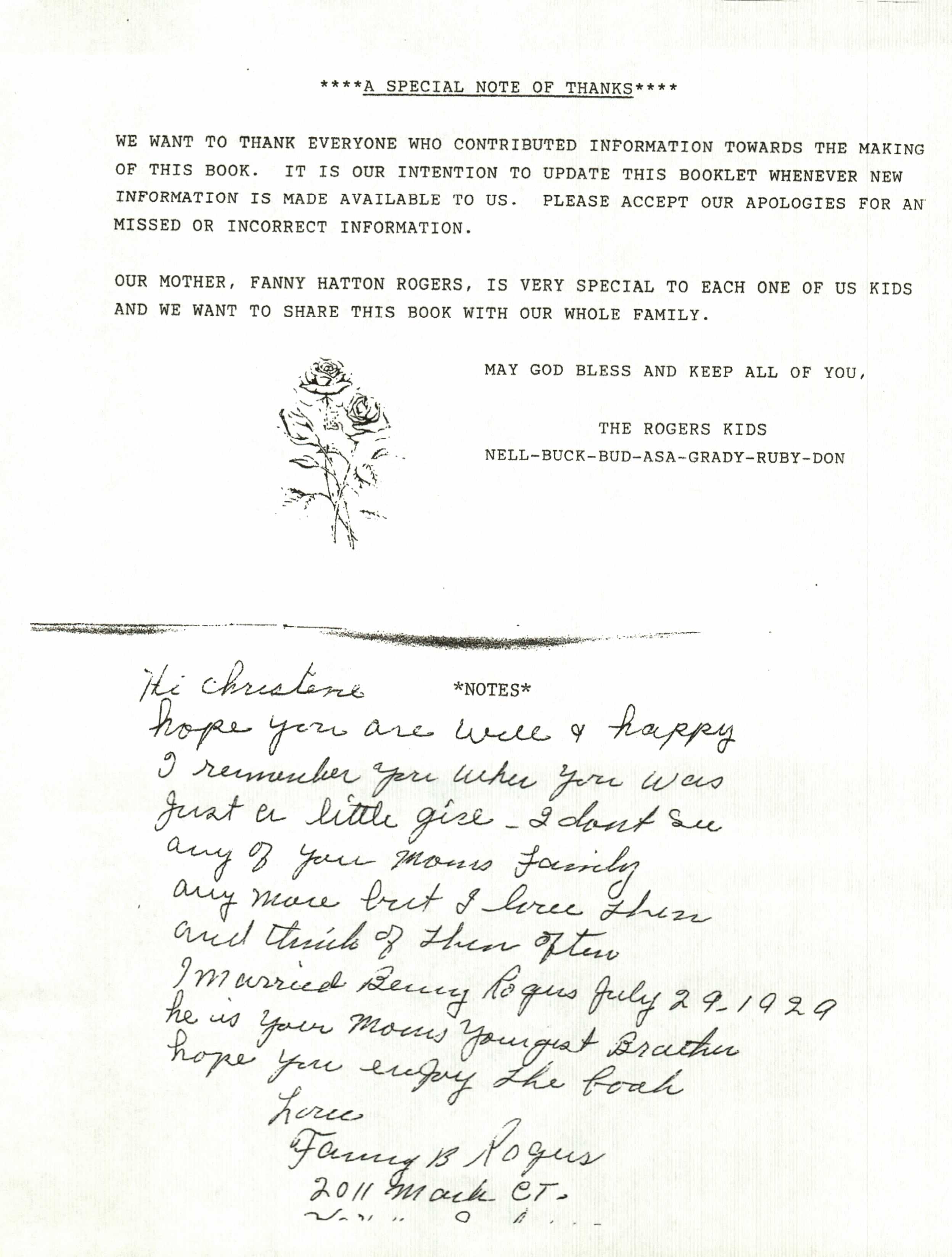
The booklet’s closing note from Nell, Buck, Bud, Asa, Grady, Ruby and Don.
Later Years
In later years Fannie remained surrounded by children, grandchildren, great-grandchildren, nieces, nephews, and friends. Her obituary remembered her as a beloved mother and grandmother and as someone whose family carried many loving, wonderful, and humorous memories of her.
Fannie died November 1, 2004, in Kokomo, Indiana, at the age of ninety-four. She was laid to rest at Sunset Memory Garden Cemetery in Kokomo.
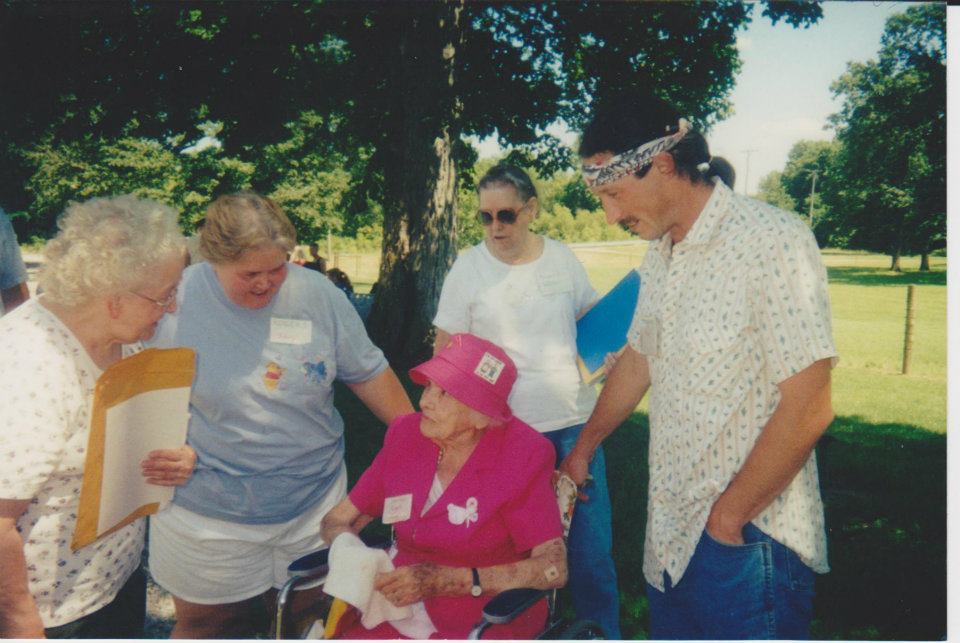
Fannie with family in later years.
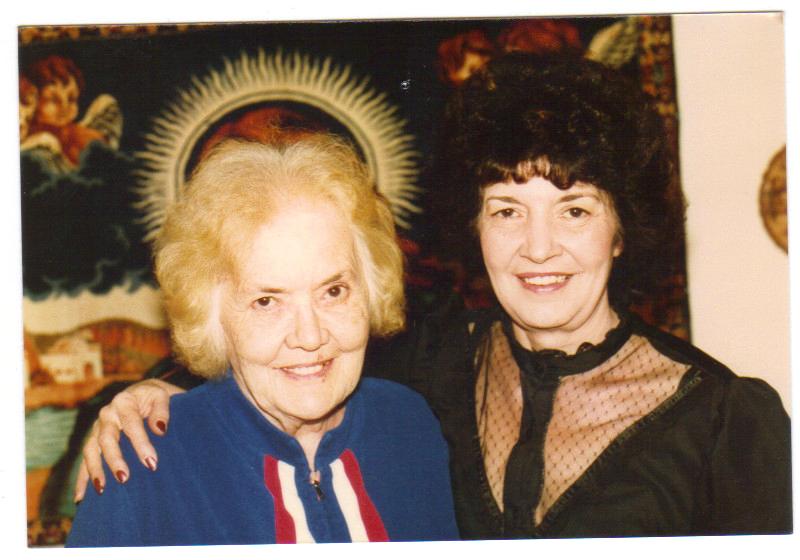
Another family visit preserved in photographs.
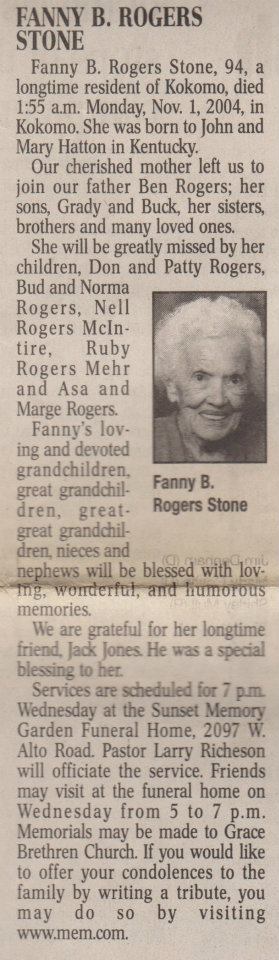
Fannie’s obituary, preserving one final public record of a long life.
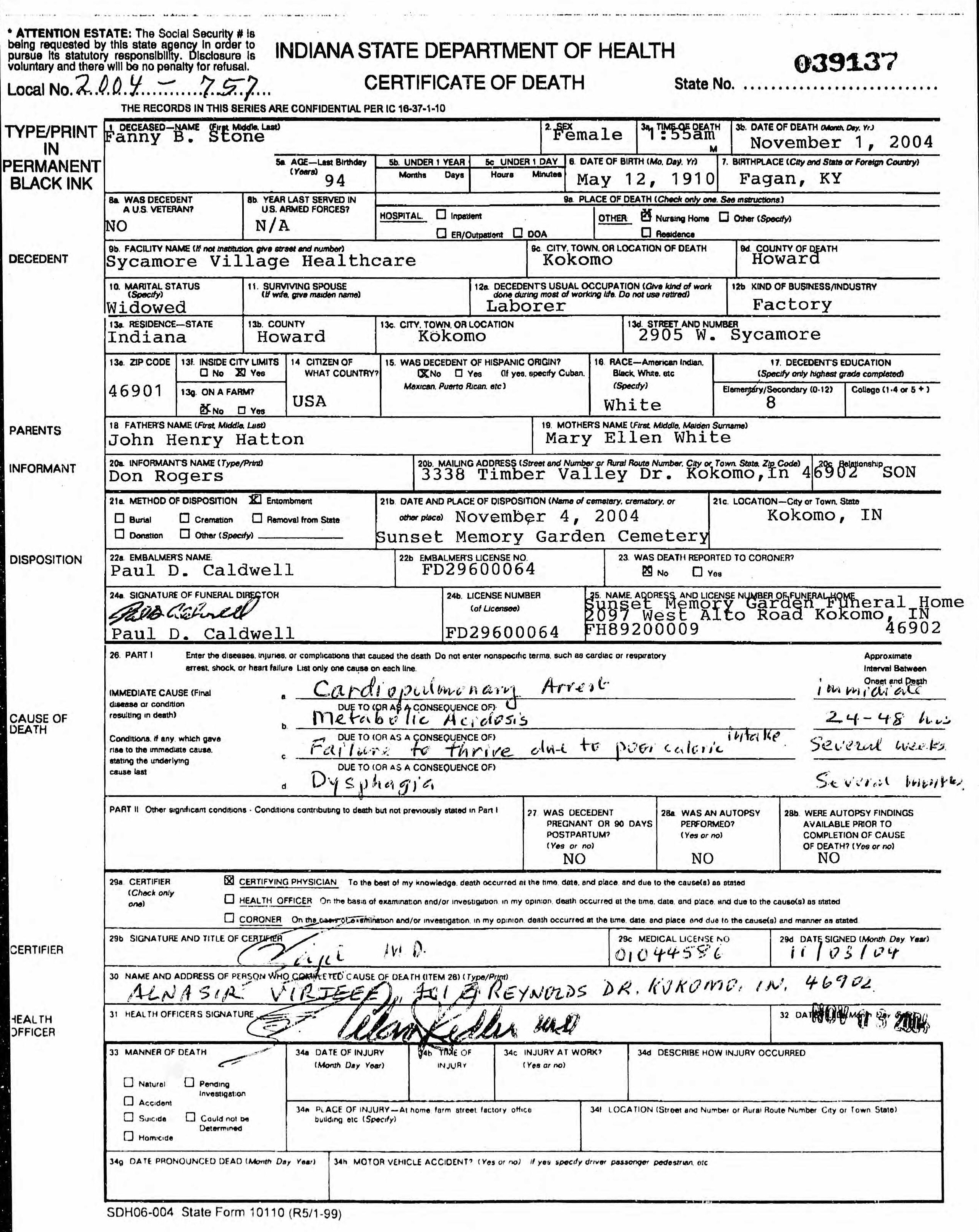
Fannie’s death certificate, recording her death in Kokomo on November 1, 2004.
A Family Remembers
The family booklet made for Fannie is remarkable because it does not remember her in only one way. To one person she was the mother who kept seven children together. To another she was Grandma with the pancakes. To another she was the woman who told stories, planted flowers, loved her house, and stayed up late playing cards.
She was also stubborn, funny, protective, opinionated, generous, hardworking, and occasionally ornery enough to throw a can of chicken noodle soup.
Taken together, the memories give a fuller picture than any census, certificate, or obituary ever could.
Still Part of the Family Story
Fannie’s life was not easy. She knew poverty, widowhood, hard work, a burned home, moving, factory jobs, laundry work, and the responsibility of raising seven children. Yet the memories her family chose to preserve are filled with food, flowers, stories, jokes, stubbornness, card games, children, grandchildren, and the ordinary acts of love that held a family together.
She wanted to be remembered for the love she gave her children and family. The memories they left behind show that she was.
About the Family Booklet
Much of the personal material on this page comes from a family booklet prepared for Fannie at Christmas 1991. The booklet itself notes that some information may have been missed or recorded incorrectly and that the family hoped to update it. For that reason, quotations and recollections are preserved as family memory, while official records and contemporary newspaper reports are identified separately.