Izane Ellen Hatton Robbins
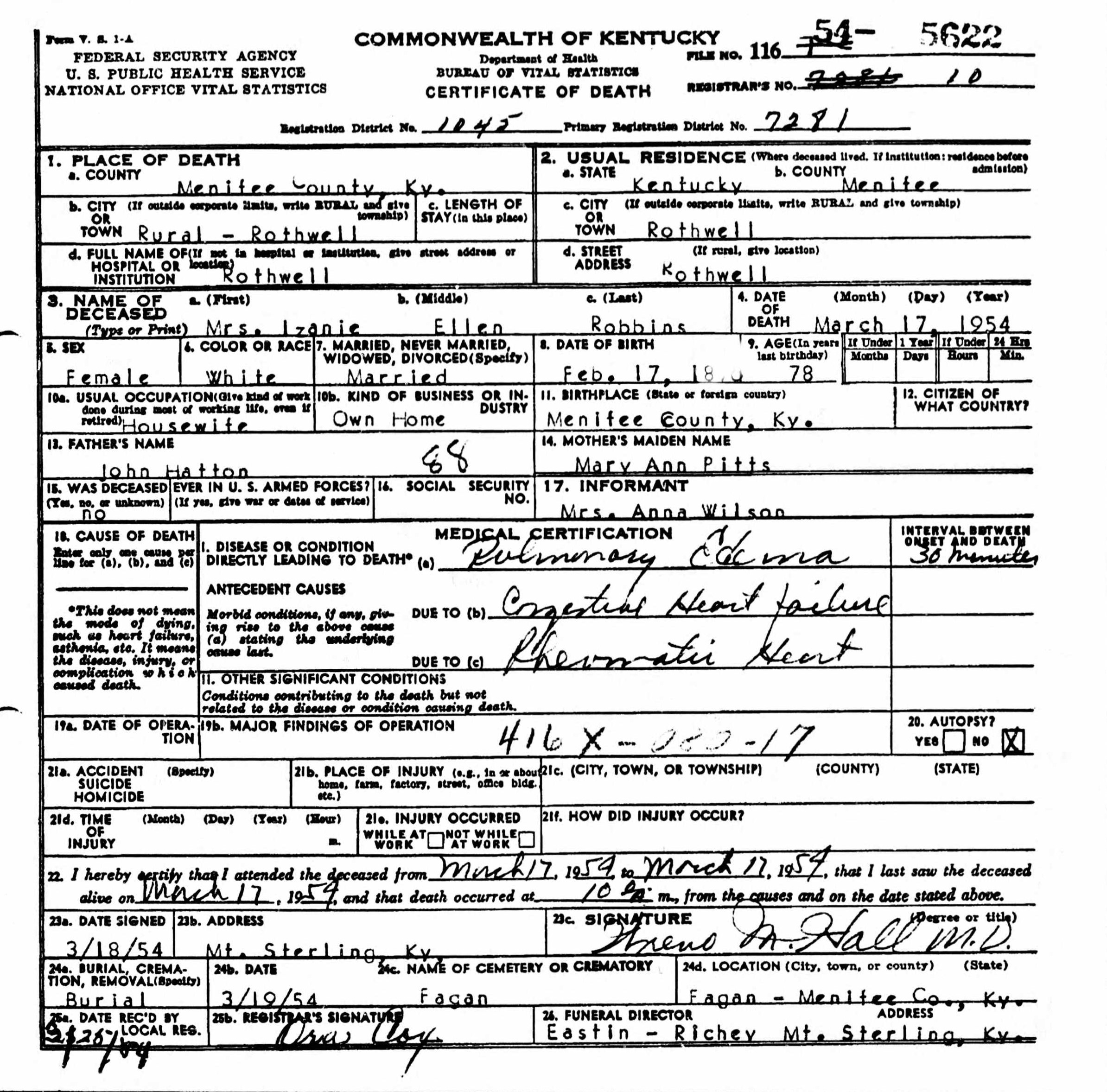
February 17, 1876 – March 17, 1954
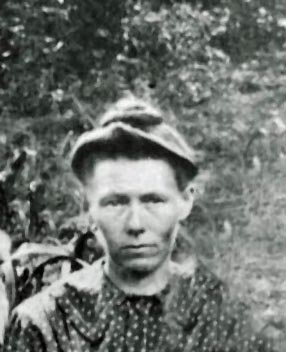
Izane Ellen Hatton was born on February 17, 1876, in the quiet hills of Menifee County, Kentucky, a place where life moved with the seasons and families were bound together by faith, work, and shared ground. She was the daughter of John Preston Hatton and Mary Ann Pitts, and she grew up among the ridges and hollers of Leatherwood — a place she would never truly leave behind.
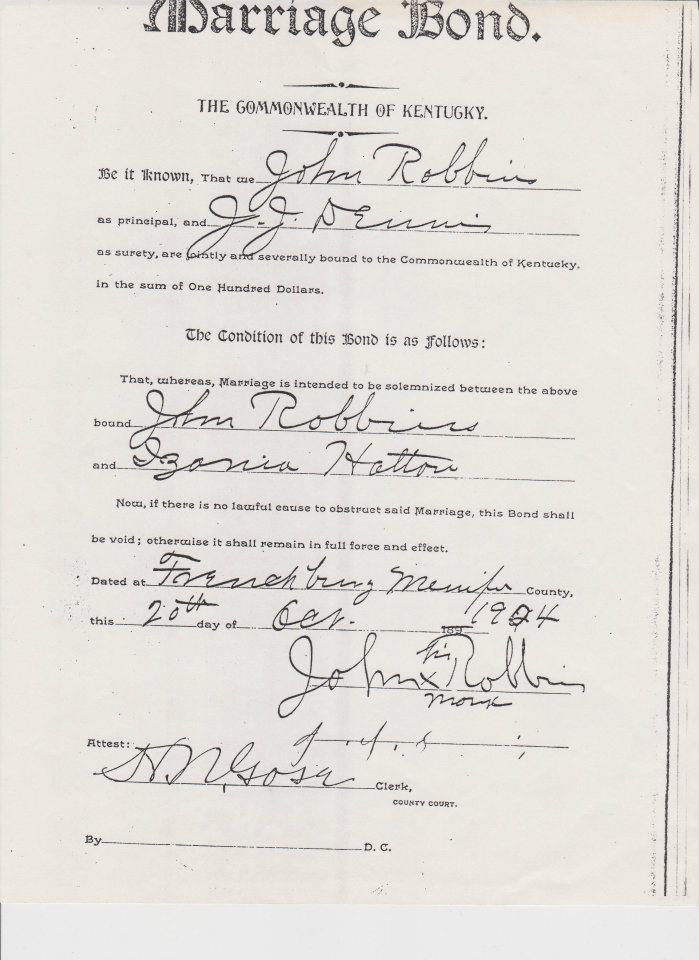
On October 20, 1904, Izane married John Morgan Robbins in Frenchburg. Together they built a modest home life in Leatherwood, raising three daughters: Hazel, Annie, and Emma. Theirs was not a life of luxury, but one of steady rhythm and purpose — crops to tend, babies to rock, and quilts pieced together in the evening hush after the day’s work was done.
Those who knew her remembered her as “Aunt Zane,” a figure of calm and quiet faith. Rose Faulkner once recalled seeing her every Sunday, walking to Fagan Church in her “old ladies’” dress and hat, the church bell ringing across the valley as she passed with purpose and grace. She was not one for frills or fuss, but she was faithful — faithful to her routine, to her family, and to her God.
The things she left behind speak softly of the life she lived. A well-worn copper tea kettle, dated 1897, and a handmade quilt remain as quiet witnesses to her days. They tell of hands that were rarely still, busy with work and care, and of a heart steady and dependable, like the ticking of a parlor clock.
Izane passed from this life on March 17, 1954, at the age of seventy-eight, in her home on Hawkins Branch. By then her daughters were grown and living elsewhere — Hazel and Annie in Winchester, Emma up in Kokomo — but distance never loosens the ties of a close-knit family. In her final days, the house likely smelled of warm tea and damp linens, its walls holding decades of laughter, labor, and love.
She was laid to rest in Fagan Cemetery, not far from the little church she had walked to so faithfully each week. Her stone is modest, just like she was, resting in the hillside soil she had known all her life.
Izane left behind more than children, grandchildren, and great-grandchildren. She left a legacy of quiet strength — the kind that lingers in worn dish towels and well-used teacups, in the careful stitches of a family quilt, and in the stories still told around the supper table. Her life was not marked by grandeur, but by roots, and those roots still hold.
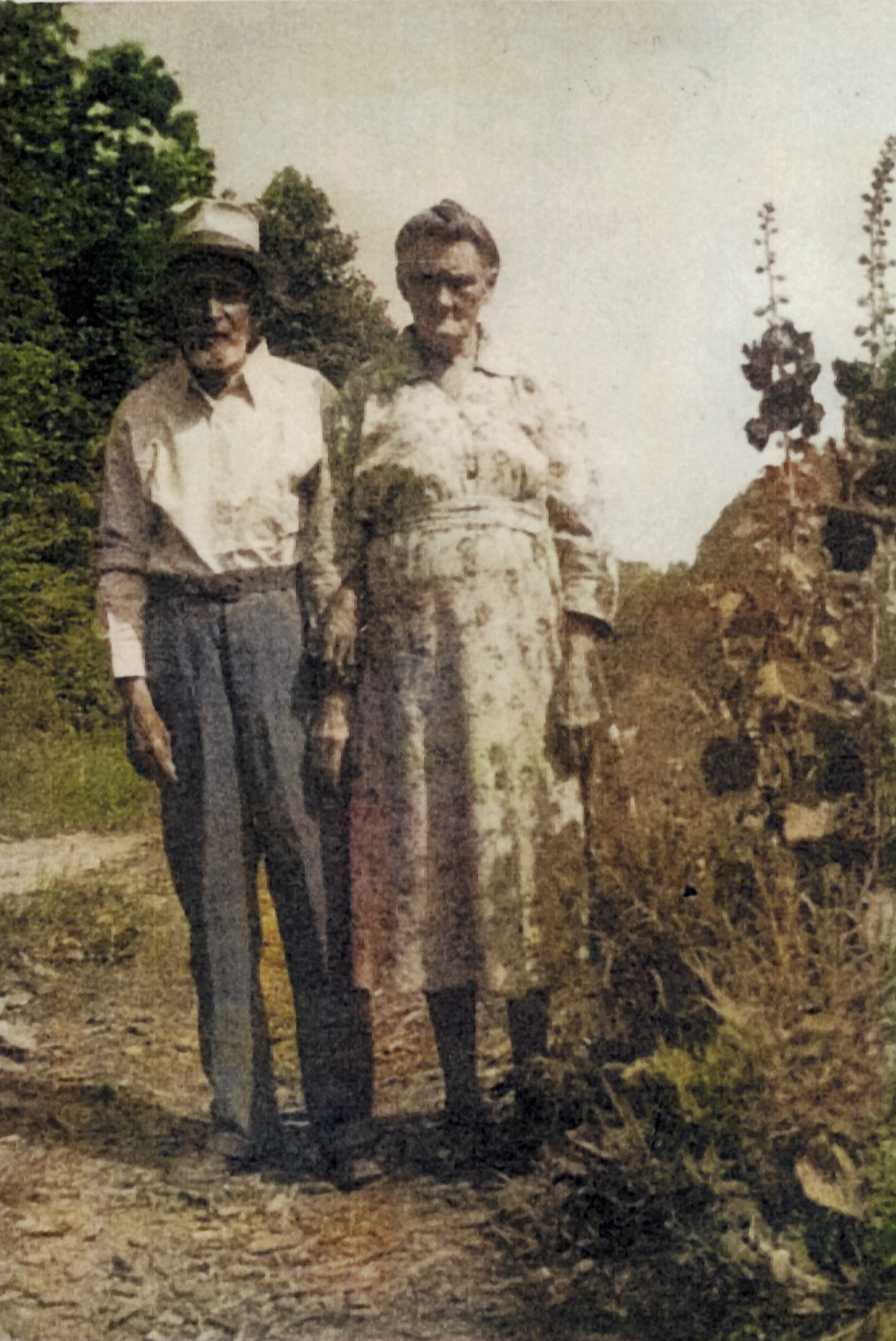
– side by side, in life and memory.
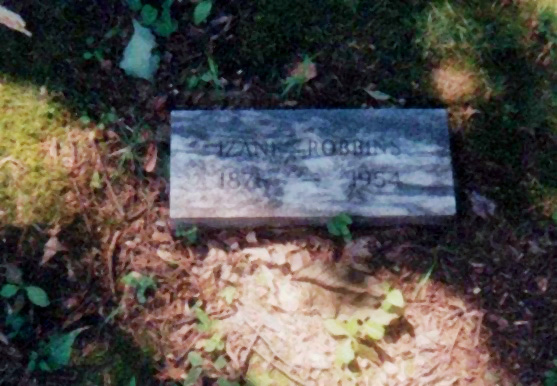
Resting beneath the trees of Fagan Cemetery.
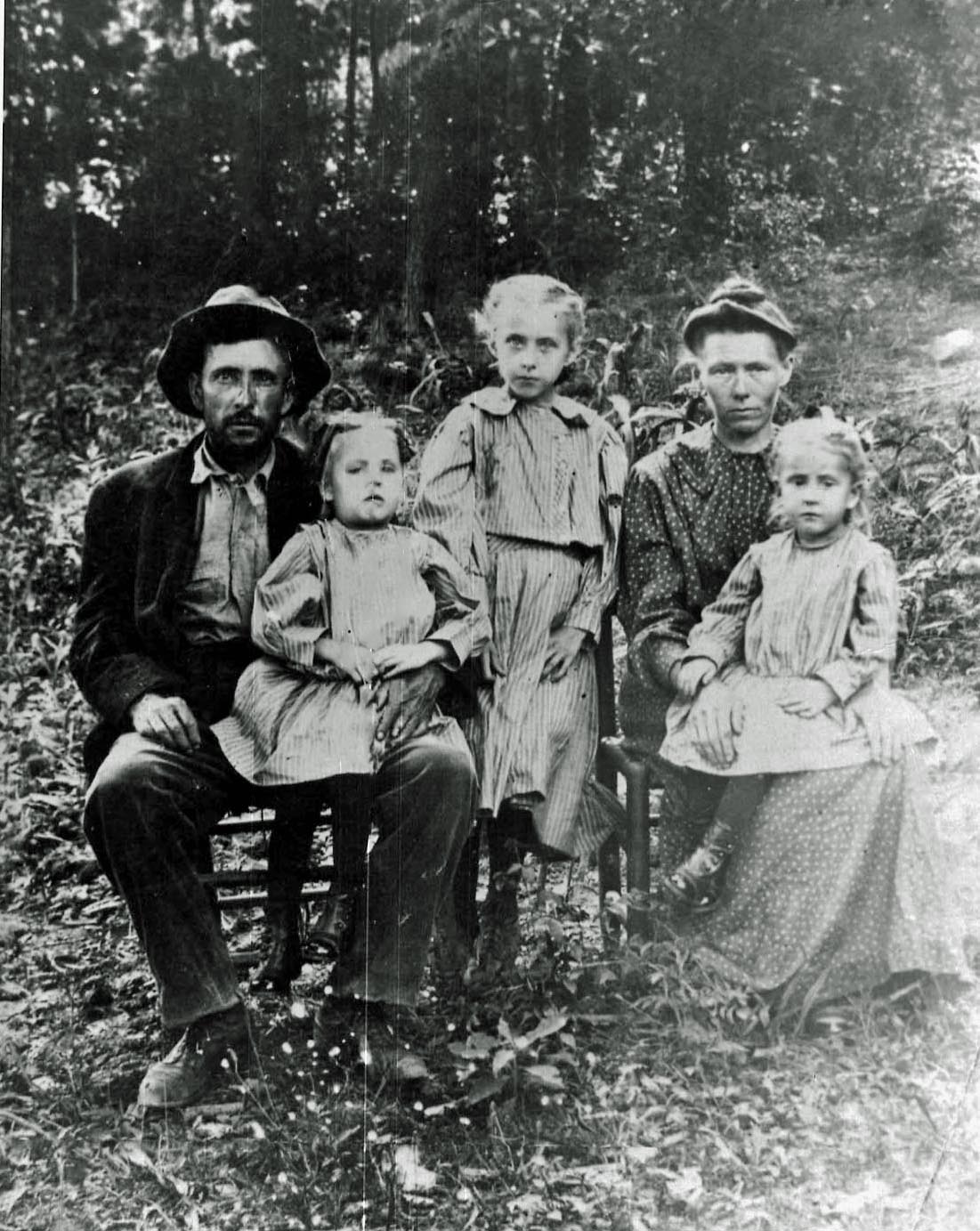
– Leatherwood, Kentucky, early 1900s.

 Help Us Preserve Our History
family knowledge about individuals mentioned on this page?
We would love to hear from you.
Every name has a story, and your contribution helps bring that story to life.